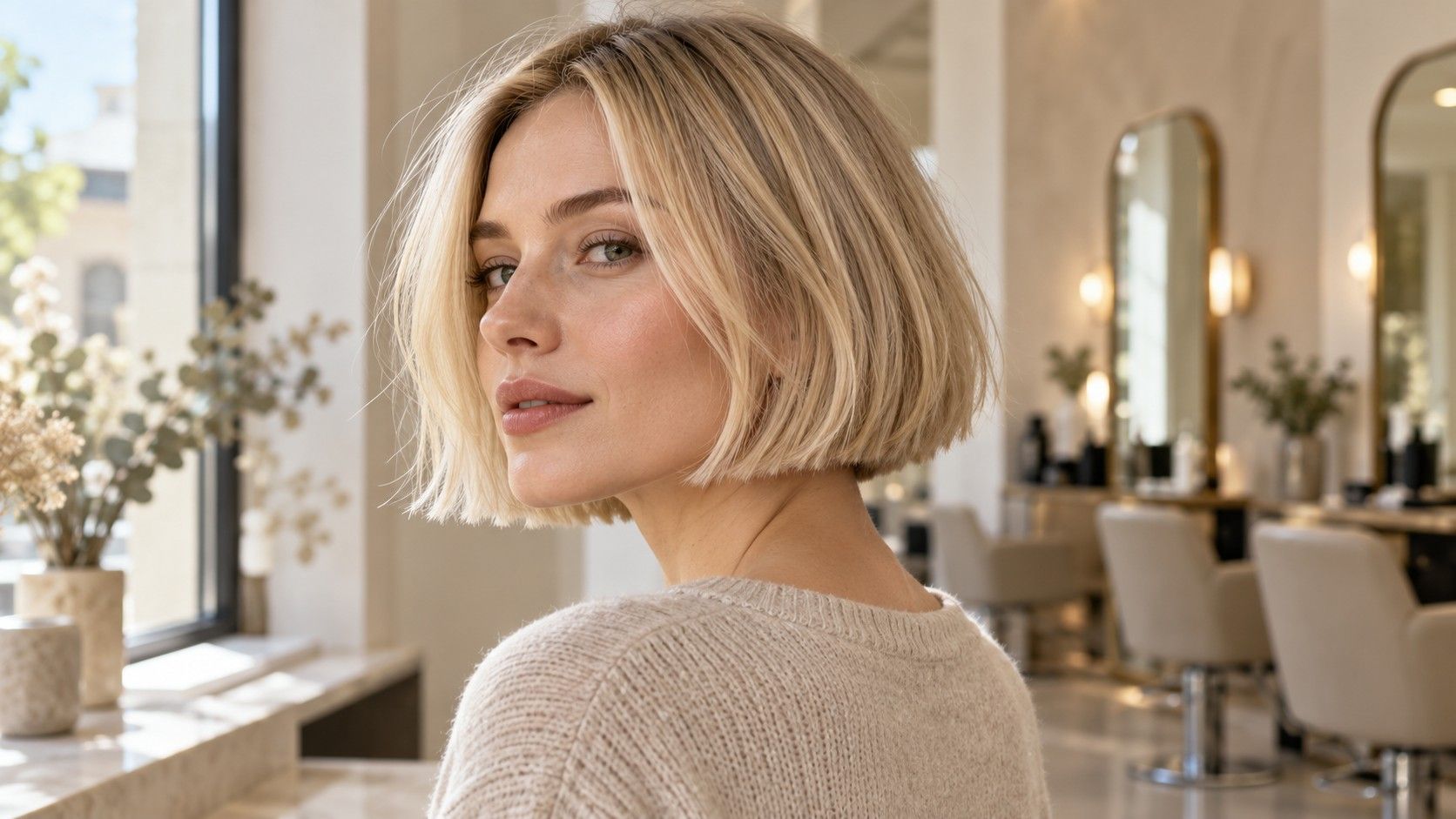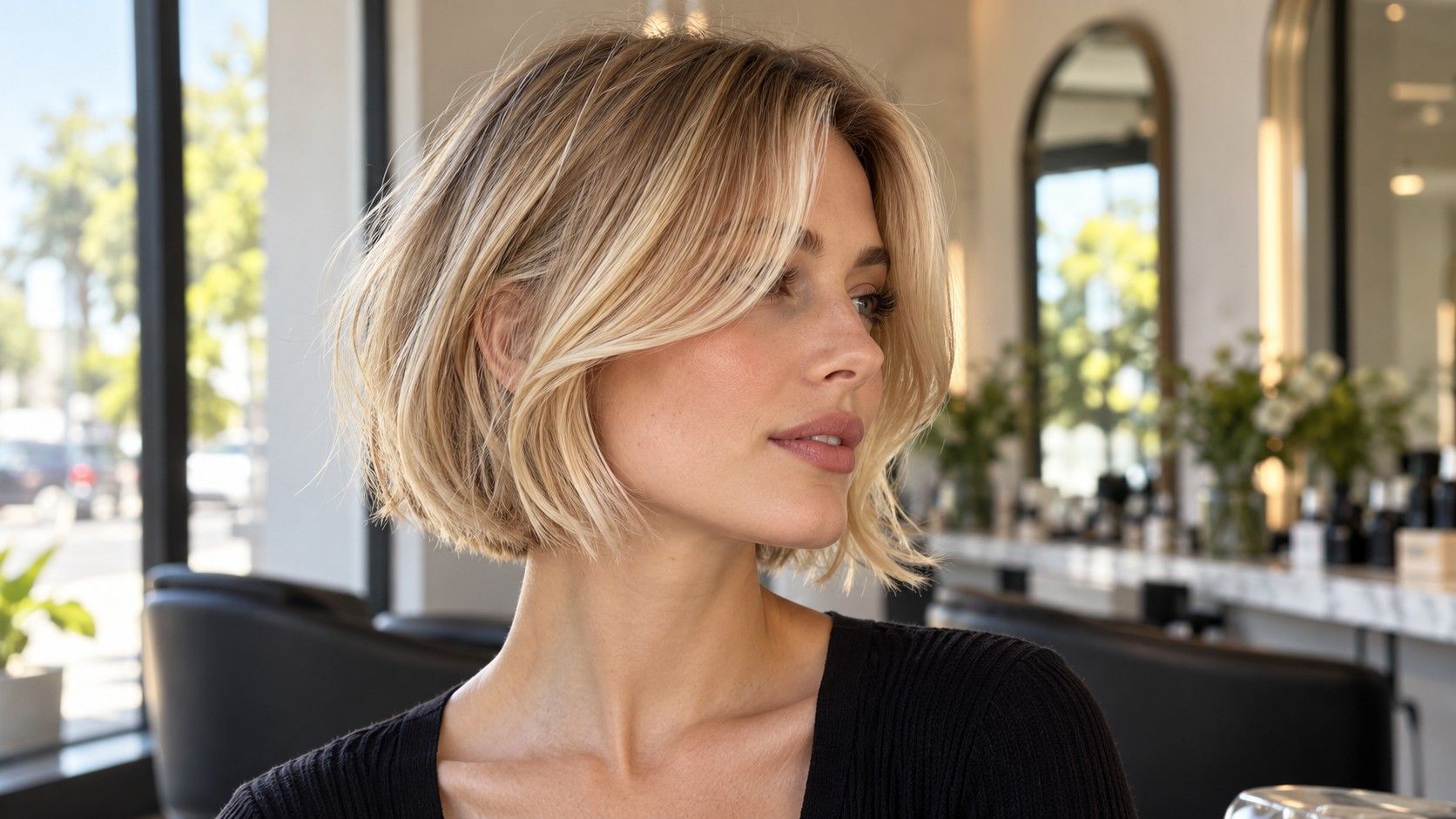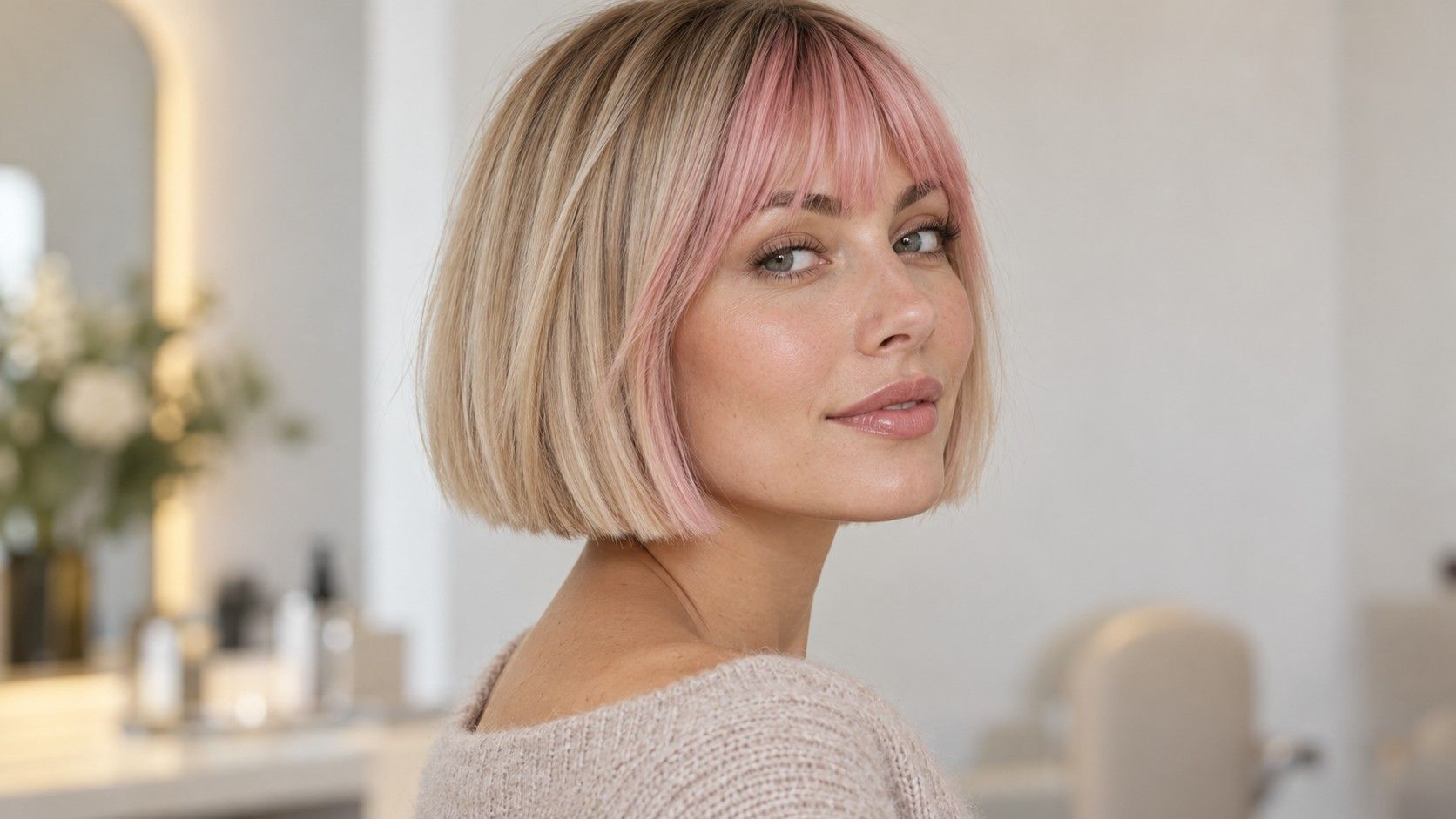
Pink bangs can change the whole character of a blonde bob, even when the colored section is small. Before settling on a shade, decide exactly where the pink should begin and end, how it should look when the fringe separates, and how much change you will tolerate as it fades. A clear placement plan gives your colorist something more useful than a filtered close-up.
Decide how much pink should show when the fringe moves
A pink fringe can be a narrow accent, a solid panel across the forehead or a few visible pieces within blonde bangs. Those options look quite different once you turn your head or change your part. Start by deciding whether pink should read as the main feature from across a room or appear as a detail at close range. A tightly cropped inspiration photo may conceal how far the colored section extends over the crown.
At the consultation, ask the colorist to separate the proposed section before any color service begins. Look straight ahead, then turn toward each side. Lift and release the fringe, wear your glasses and try your usual part. This shows where blonde hair may fall over the pink and where pink may escape into the sides. If you wear a clip or tuck your bob behind your ears, check that arrangement too. A placement that works with a fixed center part may look uneven with your everyday side part.
For blonde hair with pink bangs, the border is as important as the shade. A narrow pink accent leaves more blonde around the face but may disappear inside a dense fringe. A full panel remains visible through movement, yet makes regrowth and fading more obvious. Neither promises less maintenance simply because the total colored area is small. The front gets handled, washed and restyled frequently, which can affect how the finished look wears.
Compare the pink beside the blonde you have now
Bring references that show both colors together, preferably in daylight and without a strong filter. A pale rose against creamy blonde gives a lower-contrast effect than vivid magenta against very light blonde. The same pink can look different beside warmer or cooler surrounding lengths. Describe what attracts you to the photo: the softness, the clear color block, or the contrast at the hairline. A shade name such as bubblegum is too open to interpretation on its own.
Look at your current blonde in the mirror before discussing a major change to it. You may like the combination with the base you already have. If the reference requires a very different blonde, that is a separate question about condition, suitability and upkeep for your colorist. There is no need to treat the inspiration image as a promise that your hair will produce an identical result. Previous color and the way your hair accepts pigment can limit the closest practical match.
Clothing provides a useful reality check. Hold a top you often wear near your face, or bring a photo showing your usual wardrobe. A vivid panel can be exactly what you want, but a muted pink reference may not prepare you for its visual weight. Choose according to your preferences rather than a fixed rule about complexion or seasonal categories. If you are undecided, discuss a smaller visible section or a removable accessory as a way to explore the proportion first.
Make the colored edge agree with the haircut
The edge of a blunt fringe can make a pink panel look graphic and deliberate. With curtain bangs, the opening exposes more blonde at the center and spreads the pink toward the cheeks. A wispy fringe breaks the color into separate strands. Before choosing placement, confirm whether the cut itself will change during the appointment. Removing length or thinning the fringe afterward can alter the visible boundary considerably.
On a short bob, pay attention to the corner where the fringe meets the side. A pink section that stops abruptly above the temple can look intentional if the boundary is clear. Extending pink into the longer outer pieces creates a different frame and may show more color when the bob is tucked. Ask to see where the section finishes on both sides; natural density and a habitual part can make equal-sized sections appear unequal when worn.
Fine hair needs a careful discussion about how much of the front belongs to the fringe. A wide section may reveal more scalp at the opening or leave less blonde in the front corners. With dense hair, a small surface section may hide a great deal of untreated hair underneath. Ask what happens when the fringe separates in wind or after a workout. You are choosing the look in motion, not only the arranged shape in the salon mirror.
Bring questions about condition and testing to the appointment
Tell the colorist about previous color, straightening services and any fragile areas around your hairline. Include treatments done months ago if those lengths are still present. Porosity describes how readily hair takes up and loses moisture, and differences in condition can also affect how evenly color appears and how it fades. An internet photo cannot reveal the history or condition of the hair in your own fringe.
Ask whether a strand test is appropriate, what it can show and what it cannot predict. A test may help the professional assess a proposed result on a small section, but it does not guarantee identical fading across every strand. A skin allergy test is a separate matter; follow the product manufacturer’s directions and your salon’s requirements. Do not treat a color strand test as a replacement for that check.
If the front feels brittle or the stylist recommends postponing a service, discuss alternatives that do not require further chemical work. A change of placement or a clip-in accent may meet the visual goal while you reconsider the color plan. Keep the conversation about your actual hair, rather than asking how to force the reference shade in a single visit. This is also the time to request an itemized service estimate and understand which future visits are likely to be needed.
Choose the version whose upkeep you can accept
Use this comparison to describe the result you want, then let the colorist assess what is suitable for your hair. These are visual tradeoffs rather than guarantees about processing or lasting power. A small accent can still need regular attention if you want its color to look unchanged.
| Placement | Likely visual effect | Question to settle |
|---|---|---|
| Narrow accent within blonde bangs | Small flashes of pink as the fringe moves | Will your usual part hide the section? |
| Full fringe panel | A strong block across the front | Are you comfortable with a visible root boundary? |
| Pink through longer curtain pieces | Color extends toward the cheeks | How will the outer edge meet the blonde bob? |
| Removable pink accent | A change you can take out | Can it sit securely without showing attachments? |
Ask about the home-care products recommended for the specific service, including whether a tinted product is suitable. More pigment is not automatically better: it may change the shade or affect surrounding blonde. Follow instructions and the colorist’s advice rather than improvising a mixture. Also ask about possible transfer to pale towels or pillowcases and what precautions apply to the product used. Knowing those small inconveniences beforehand makes the choice easier.
Plan for fading before choosing the first-day shade
Pink usually changes as it wears, but there is no dependable universal wash count. Product choice, starting color, hair condition, washing habits and heat styling all influence the result. The fringe may also get washed more often than the rest of a bob because it touches your forehead and collects styling product. Tell the colorist if you routinely rinse only your bangs between full washes, since that habit is relevant to the maintenance plan.
Ask what faded tones are plausible on your current base and what the plan would be if you dislike them. Some pinks become softer and less saturated; others may leave a residual tint. Do not assume that a shade described as temporary will return your blonde precisely to its starting appearance. If you need a predictable blonde look for a particular event, discuss that date before the service and allow room for professional assessment rather than relying on an online removal trick.
Take a daylight photo after the appointment and another when the color begins to feel too pale or uneven for your taste. Those pictures help establish your own refresh point. At the next visit, distinguish between wanting the pink stronger, wanting the section smaller, and wanting the haircut adjusted. They are different changes. A successful pink fringe is one whose placement you enjoy throughout normal movement and whose changing color fits the amount of attention you are willing to give it.