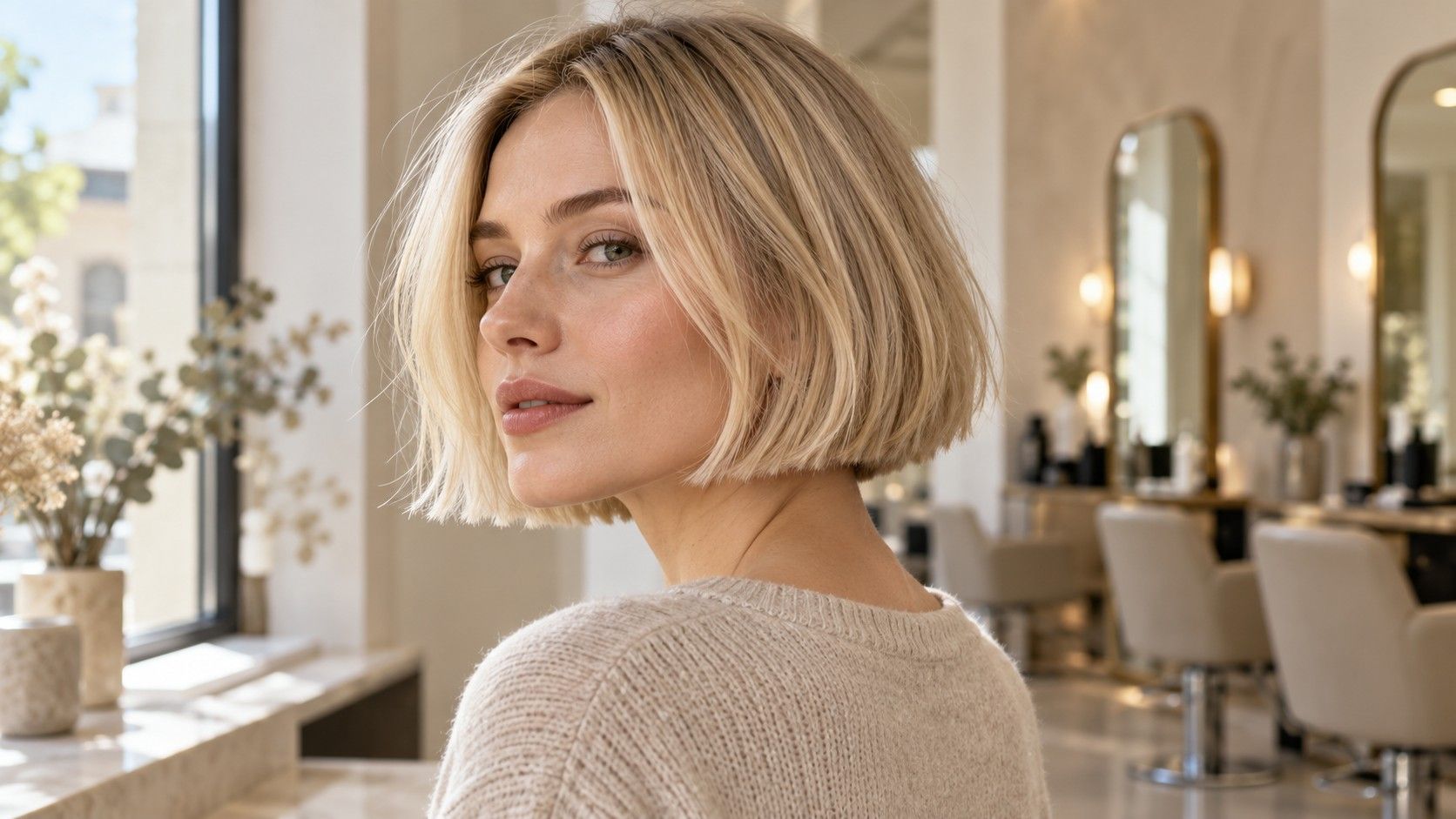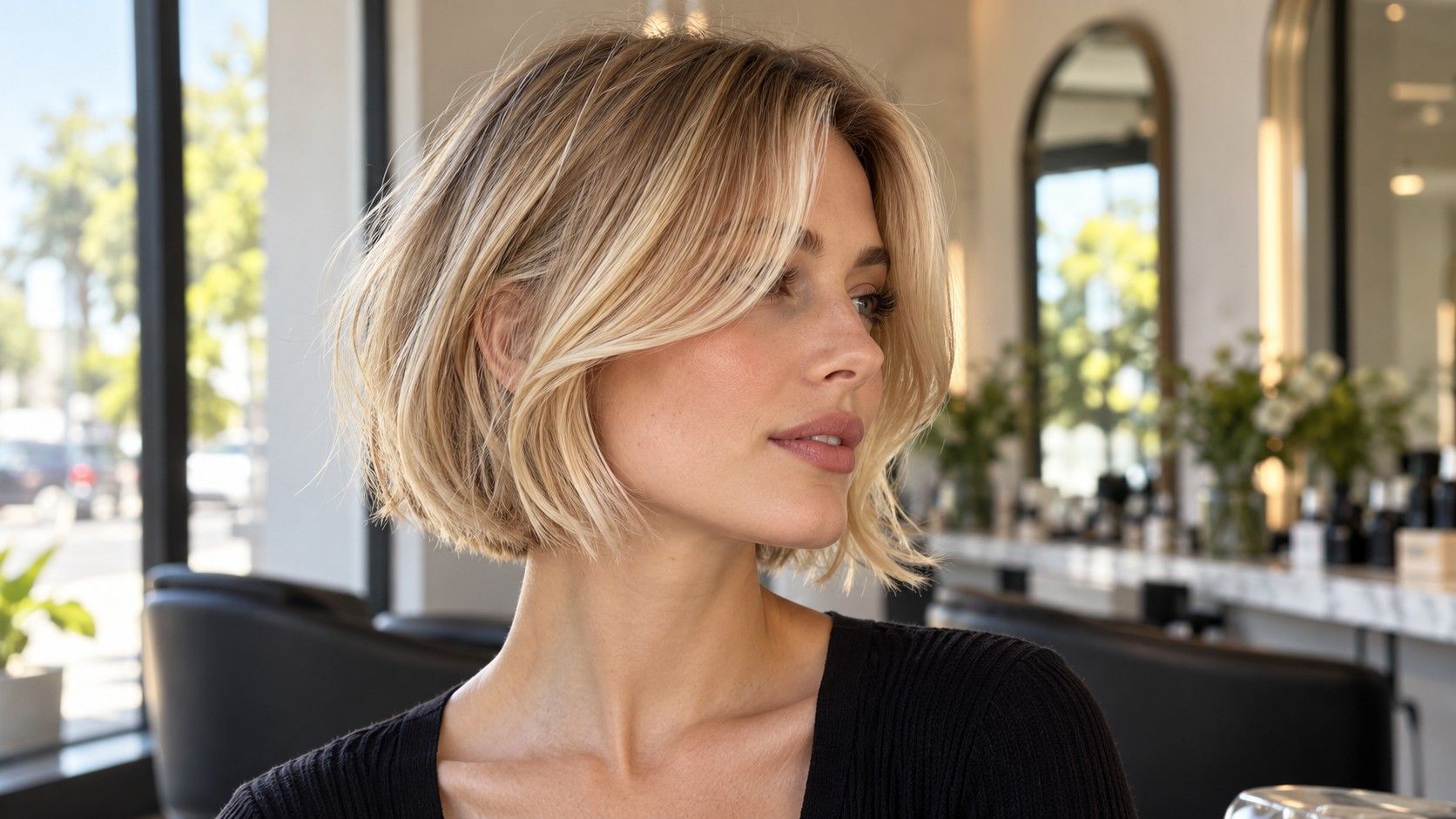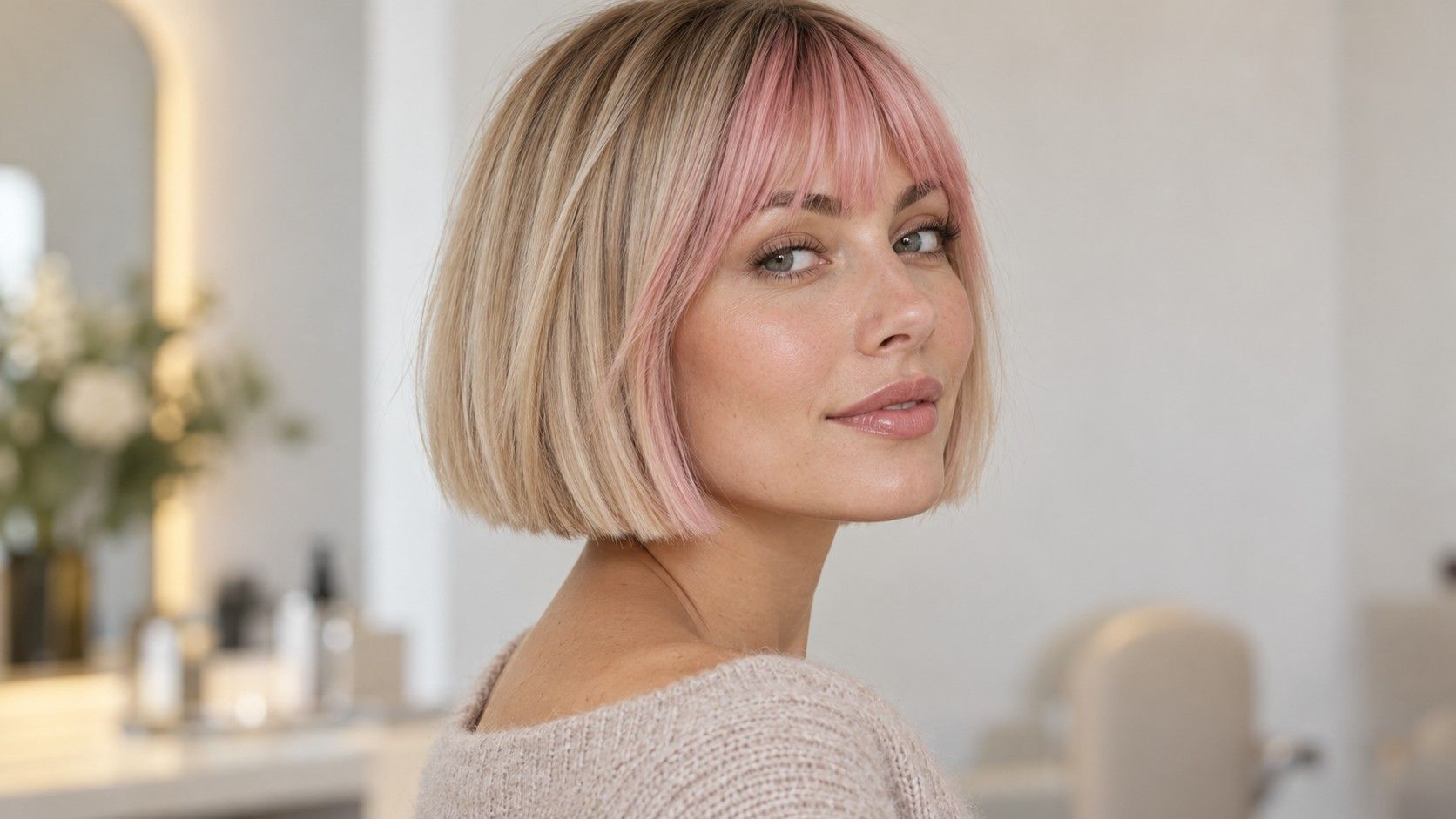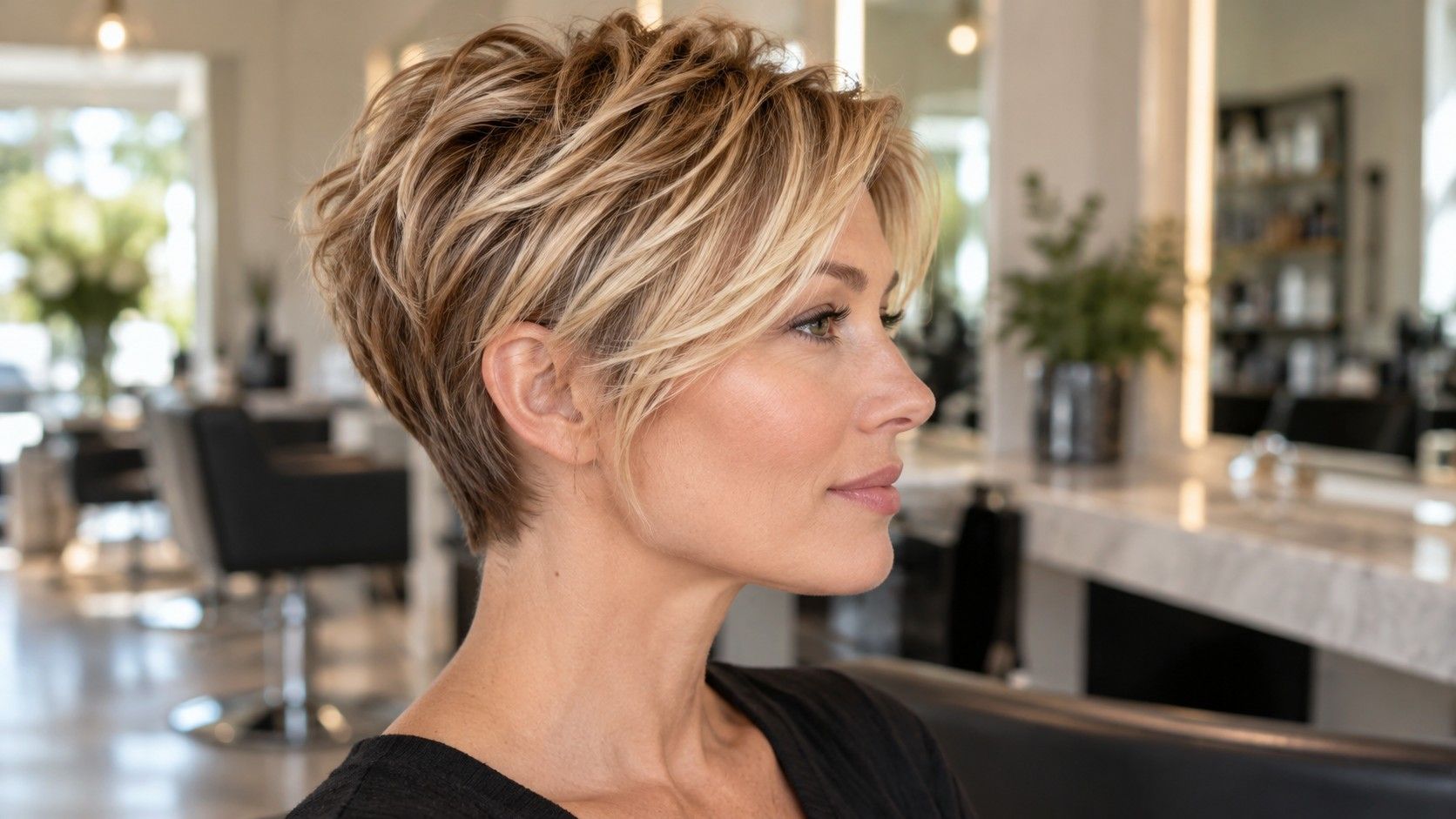
Blonde looks quite different on a close crop and a chin-length bob, even when the shade has the same name. There is less length to spread the color across, so a bright fringe, a dark parting or a pale perimeter can become the main feature. Before collecting blonde short hair color ideas, decide what you want the haircut to show: a strong outline, soft movement, a longer top or a deliberate contrast at the roots. Then choose a color plan that still makes sense when the hair is washed, tucked behind an ear and growing out.
Choose the outline before deciding where to go light
A blunt bob gives the eye a clear horizontal edge. A relatively even blonde can emphasize that shape, while fine differences through the surface give it a less uniform appearance. Look at the ends in your reference picture. Are they a continuous pale band, or are there darker pieces breaking up the line? Those are different requests, even if both photos are described as a beige blonde bob.
On a pixie, the longer top and shorter sides provide their own contrast. Lightening the top while keeping depth beneath it can make that length change more visible. A pale fringe also draws attention to its shape, including a diagonal edge or small gaps. If the fringe tends to separate in the middle, show the stylist how it falls without a brush; placement planned around a smooth salon finish may look different at home.
For a layered crop, check which layers actually sit on the surface. Color hidden under a heavy top section may appear only when the hair moves. That can be exactly the point, but it is easy to overestimate the effect from a photograph taken with the hair lifted. Bring a picture of your usual styling alongside the inspiration photo. The haircut should decide where the useful canvas is.
Compare an even blonde, ribbons and a darker root
A solid-looking blonde, fine highlights and a root shadow can all produce a light overall impression. They differ in where the darker areas remain. An even result makes the new growth easier to see when its shade contrasts with the blonde. Fine ribbons leave more of the starting color visible. A darker root creates a planned transition, although it does not mean future maintenance disappears.
| Color direction | Effect on short hair | Detail to discuss |
|---|---|---|
| Even-looking blonde | A clear block of color that puts the outline on show | How the parting and hairline will look as roots return |
| Fine blonde ribbons | Small changes in light and depth through the cut | Whether enough length remains to show the separation |
| Blonde with a root shadow | Depth near the scalp with lighter lengths | The width and softness of the darker area |
| Brighter fringe or front section | A concentrated light area around the face | How it looks with the fringe pushed back |
Use this comparison to describe a result, rather than to order a technique by name. On a very short crop, a broad dark root can occupy much of the visible length. On a longer bob, the same depth may read as a small transition. Ask to see short-haired examples from several angles, with the top lying down. A close photograph of the color alone cannot show the whole balance.
Decide how much warmth you actually want
Words such as honey, champagne, beige and ash are useful starting points, but they are loose descriptions. One photograph called champagne may look creamy; another may look nearly silver. Screen settings, room lighting and editing complicate the comparison. Choose two or three references and point to the specific area you like. Saying that the ends look too grey or the fringe looks too yellow communicates more than a shade label alone.
Consider the contrast between the blonde and your eyebrows, roots and usual clothing. A pale crop with dark brows can have a strong graphic effect. A deeper golden blonde may make the contrast less abrupt. Neither requires a rule about skin tone or a seasonal category. Hold a light cream fabric and a cooler pale fabric near your face in ordinary daylight, if you find that useful, and observe your preference without treating it as a diagnostic test.
Warmth is also a maintenance conversation. Ask what changes you might notice between visits and how the intended tone will be maintained. Do not assume that a purple product belongs in every blonde routine or that using more will preserve the reference shade. Get a recommendation for your actual color and hair condition, including what to do if the ends start looking dull or uneven.
Show the history of the length you are keeping
A short haircut can remove a lot of previously colored hair, but it does not erase the history of the strands that remain. A bob may still contain old permanent color, lightened sections or several different bands. Tell the colorist about previous services and at-home products, even when the last application seems distant. A dated photo can help explain which areas were treated before the cut.
Ask whether the desired blonde is realistic for the current length and condition, and whether a strand test is appropriate. Be prepared for a revised shade, a staged plan or a recommendation to leave some areas darker. These are decisions for someone assessing the hair directly. A picture cannot establish what your remaining lengths can tolerate, and a virtual preview cannot predict a chemical result.
Coordinate the cut and color appointment before booking separate services. If you plan to remove several inches, the stylist needs to know which pieces will remain in the final shape. If you are still choosing between a bob and a pixie, resolve that uncertainty first. Paying for a detailed blonde pattern that is immediately cut away is an avoidable disappointment.
Look at the blonde in your ordinary styling
A polished bob creates broad reflective surfaces. A softly waved bob breaks those surfaces into smaller areas of light and shadow. The placement can therefore seem much bolder in one finish than the other. If you usually air-dry, include an air-dried photograph in the consultation. If a straightener is a once-a-month choice, do not make it the only version of the result you evaluate.
Try the small arrangements you repeat during a normal day: a side part, both sides tucked, fringe pinned away, glasses on. A bright panel beside the face may vanish behind an ear or reveal a darker area underneath. A deep part can expose roots that were hidden in the reference. These details matter more than finding a single flattering front-facing pose.
Keep shine expectations separate from color expectations. Studio lighting and a fresh salon finish contribute to a glossy photograph. Ask about a manageable routine for the cut, including any styling product the stylist actually used. A blonde you enjoy with a quick dry and a little texture may suit your week better than a more dramatic result that depends on a finish you rarely recreate.
Plan the next haircut alongside the next color visit
Short hair changes shape as it grows, and trimming can change the visible color pattern. A cropped side may lose its lighter section at the next cut, while a longer top keeps it. The ends of a bob can gradually lose the brightest part of a placement. Ask what will remain after your usual trim and whether the color plan needs adjusting at that visit.
Rather than accepting a universal touch-up interval, discuss how much regrowth you are comfortable seeing. Your starting shade, placement and preferred finish all affect that choice. Request an estimate of the appointment type, time and cost for maintaining the result, as well as the initial service. A manageable first appointment is only part of the decision.
Before leaving, take a clear photo in neutral light and note the agreed color description. Use that image as a reference when the hair grows and the tone changes. At the next consultation, explain what you liked during the weeks between appointments: perhaps the softer root was welcome, while the pale fringe felt too sharp. That observation gives the next blonde more direction than another folder of unrelated inspiration pictures.