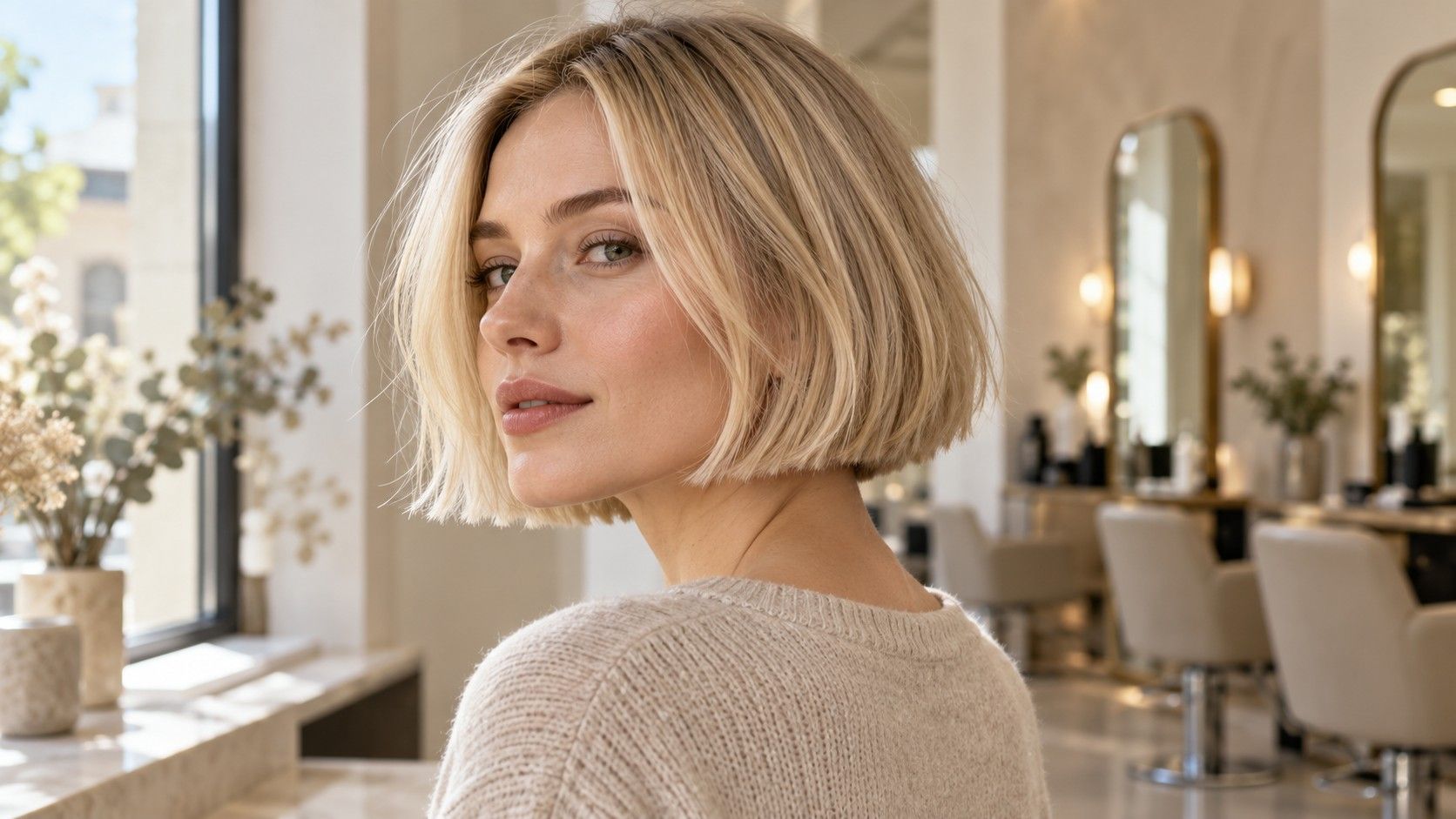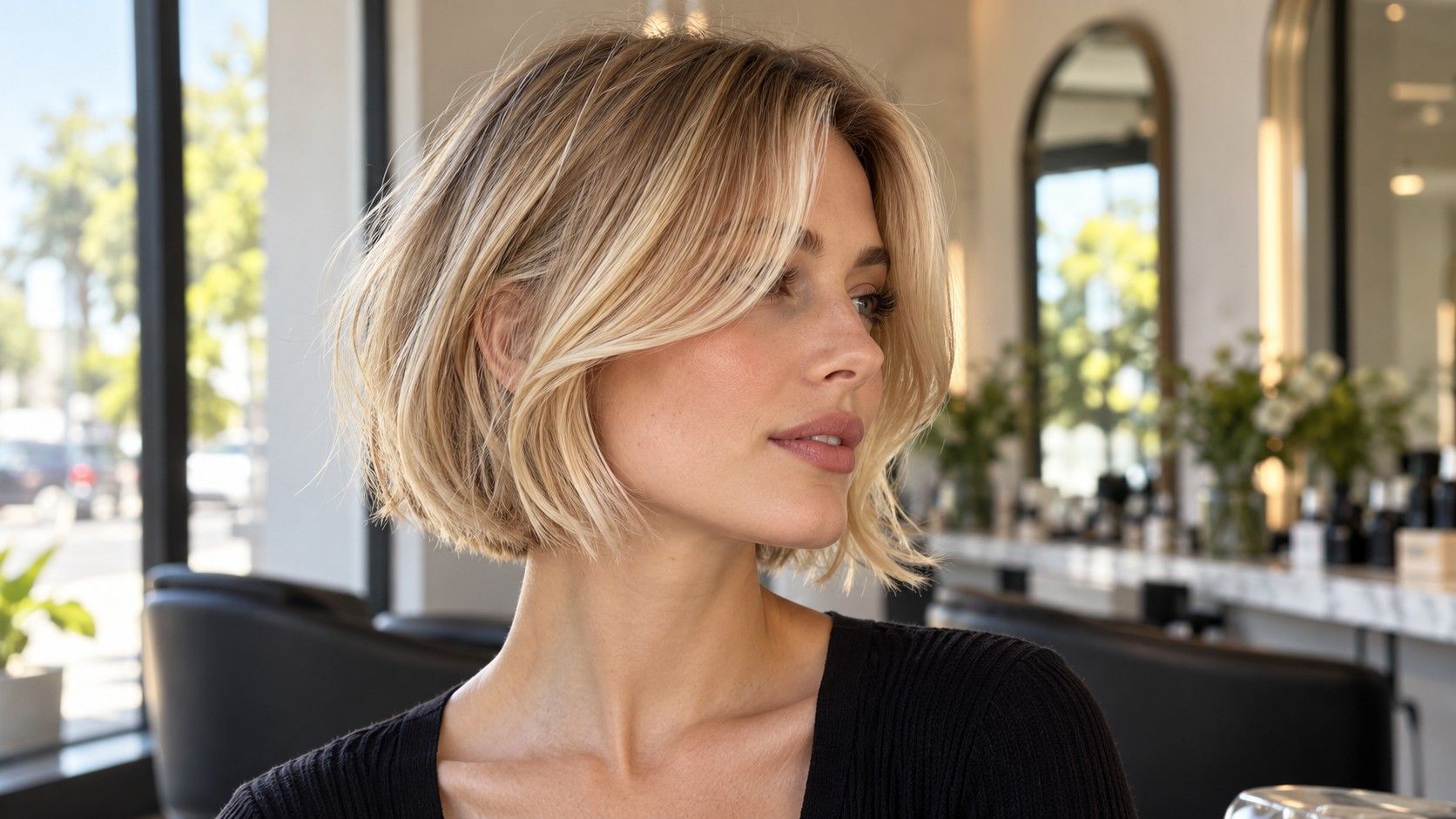
The most useful way to compare short blonde haircuts for women is to look past the front view. A pixie with a long fringe, a close crop and a jaw-length bob can all look soft in a styled photograph, yet they feel very different around the ears and neck. Start with the amount of hair you want to touch, tuck and move each day. Then choose the outline, and use blonde placement to support it.
Decide what you want to keep around your ears
Ear coverage is a concrete starting point. Do you want the ears fully visible, a little hair resting over the upper edge or enough length to tuck the sides back? These choices affect how the haircut feels when you put on glasses or push your hair away from your face. Stand in front of a mirror and hold the sides at different lengths before collecting more references.
A short side can be convenient, but it also makes the exact edge part of the haircut. Sideburn length, the shape behind the ear and the transition into the nape become more visible. A long front section does not necessarily mean the sides can tuck. Check the actual distance from the temple to behind the ear rather than judging by a fringe that falls toward the cheek.
If you are accustomed to putting all your hair into a ponytail, separate that habit from the idea of “low maintenance.” A shorter cut may remove drying time while removing your usual solution for an uncooperative morning. Clips, a headband or a different styling routine may be enough, but consider that adjustment before choosing the shortest option.
Compare the shapes without relying on the haircut name
“Pixie” and “crop” overlap in salon language. One stylist may use crop for a compact, short shape with a defined fringe; another may use it for a softly textured cut. A pixie can have close sides and a long top, or a more even, rounded shape. Describe the lengths and outline you see in the reference instead of expecting a name to settle those details.
| Option | What to examine | Everyday decision |
|---|---|---|
| Pixie with a longer top | Contrast between the top, temples and nape | How much fringe will fall forward? |
| Compact crop | Fringe edge and how closely the sides sit | Do you like the outline without extra lift? |
| Short bob | Perimeter height and fullness at the sides | Must the sides tuck behind your ears? |
| Long pixie or very short bob | Length above the ear and weight at the back | Which parts should stay long during growth? |
A bob generally leaves more of a continuous lower edge. That edge may sit around the jaw or higher, with a different relationship to the nape and ears. If a photograph shows only the front, you may not know whether the back is level, softly rounded or strongly graduated. Find a rear view before using it as the main reference.
When two options look appealing, compare the shortest part of each. A long-fringed pixie may appear longer from the front than a tiny bob, while having much less hair at the sides. The shortest section determines much of the commitment if you later want an even bob again. Ask your stylist to show that section on your own head.
Let your natural movement help choose the outline
Look at clean, dry hair before styling it into submission. Notice which way the fringe grows, where the crown separates and whether the nape lifts. A close cut can reveal those patterns; extra length can sometimes change how they settle. Neither response is universal. Your stylist needs to examine your own hair rather than promise that any short haircut will dry perfectly by itself.
For a forward-growing fringe, a reference with hair swept high off the forehead may involve more work than the image suggests. If you like a soft fringe that falls naturally, that same growth direction could help. Explain whether you are comfortable using a dryer and a brush, or whether you expect the fringe to settle after finger drying.
Waves and curls change the visible outline as they dry. A curl above the ear may project outward instead of falling down; a longer top may spring higher than expected. Bring a photograph of your usual dry texture and discuss the finished shape in that state. There is no single extra length that safely predicts every curl pattern.
Density matters separately from strand thickness. A dense crown and less dense temples may need a different balance from an evenly full head of hair. Ask where weight would remain and where it would be removed. Very airy ends in a pale blonde reference can look appealing under studio lighting, yet leave less visible coverage than you prefer at home.
Choose blonde details after choosing the cut
Decide whether you want blonde to read as an overall color or as contrast within the haircut. A pale top with deeper sides emphasizes a difference in length. Softly blended lighter pieces can break up a longer fringe. A more even blonde makes the whole silhouette easy to see. These are visual goals to discuss, rather than instructions to choose a particular chemical process.
Existing color placement may change substantially when length is removed. The light ends of a bob can disappear in a crop, leaving the darker section that used to be near the roots. Bring current photographs and describe earlier coloring so the stylist and colorist can plan the cut and assess the color result together. Do not assume shortening the hair automatically creates the reference shade.
Ask how visible regrowth will be with the intended contrast and styling. Short sides expose a different area from a longer fringe, and the color may look different when you change the parting. A softer transition near the roots can alter the appearance of growth, but it does not remove the need to discuss ongoing appointments and cost.
Keep the conversation about the achievable result on your hair. Warm and cool blonde references are affected by room lighting and screens. Say whether you like the brightness, the creamy appearance or the darker depth underneath. Let the colorist assess condition and previous color history; avoid using a filtered photograph as a promise of an exact match.
Check the work between appointments
A short haircut can be quick to wash and still require attention to keep a particular outline. Hair growing around an exposed ear may change the edge noticeably. A fringe can start touching the eyes before the rest feels long. A bob may remain comfortable while its ends begin meeting the collar. Ask which of those changes is likely to matter first in your chosen shape.
Discuss your preferred appointment rhythm before agreeing to a precise finish. A close, sharply defined side requires a different tolerance for growth from a softly layered shape. There is no useful universal schedule that fits every head of hair and every preference. Ask for an estimate based on the cut, then decide whether that pattern fits your time and budget.
Bring up the days when you do very little styling. Does the proposed shape still appeal when it lies flatter? A lifted pixie in a reference may have product and directed drying supporting the top. A smooth crop may show a cowlick on waking. Request an explanation of the simplest everyday finish as well as the more polished version.
Growing the cut out is worth discussing at the same appointment. A long fringe with short sides can pass through an uneven-feeling stage while the sides catch up. The back may need reshaping even when your goal is to gain length overall. If you like to change hairstyles frequently, agree which areas should be preserved to make the next shape possible.
Bring references that explain the whole haircut
Save a front, profile and back view where possible. Choose references with a texture reasonably close to yours, and identify the detail you want from each. “This length over the ear, this softer back, this fringe” is easier to interpret than several completely different cuts described as the same style. Keep color references separate if the shade you like appears on a cut you do not want.
One photograph of a disliked detail can be useful too. Perhaps you want to avoid a high stacked back, a fringe cut in a very straight line or a large difference between the top and sides. Explain the feature without rejecting every haircut that happens to share its name. This gives your stylist room to suggest an outline that answers the concern.
A practical description could say: “I want my ears partly visible, a soft nape and enough top length to move the fringe sideways. I wear glasses all day and usually spend only a few minutes styling. I like blonde brightness near the front, but I want to understand the upkeep first.” That describes an ordinary day as clearly as a finished photograph.
Before the first cut, confirm the shortest length and what will remain around your face. Then ask the stylist to explain any adjustment needed for your growth pattern or density. The right choice among pixie, crop and bob is the one whose proportions and daily habits you understand before the hair is on the floor.