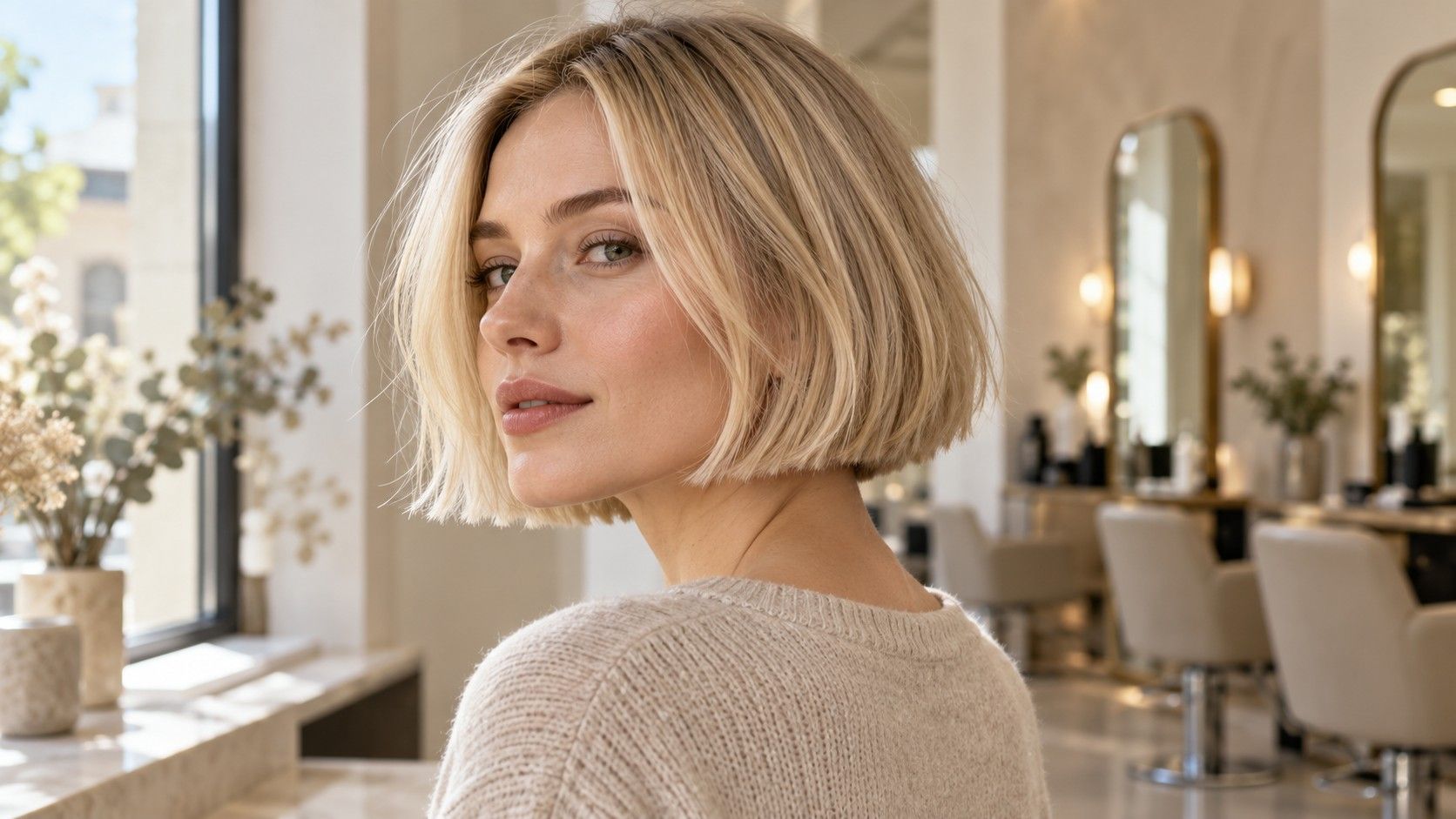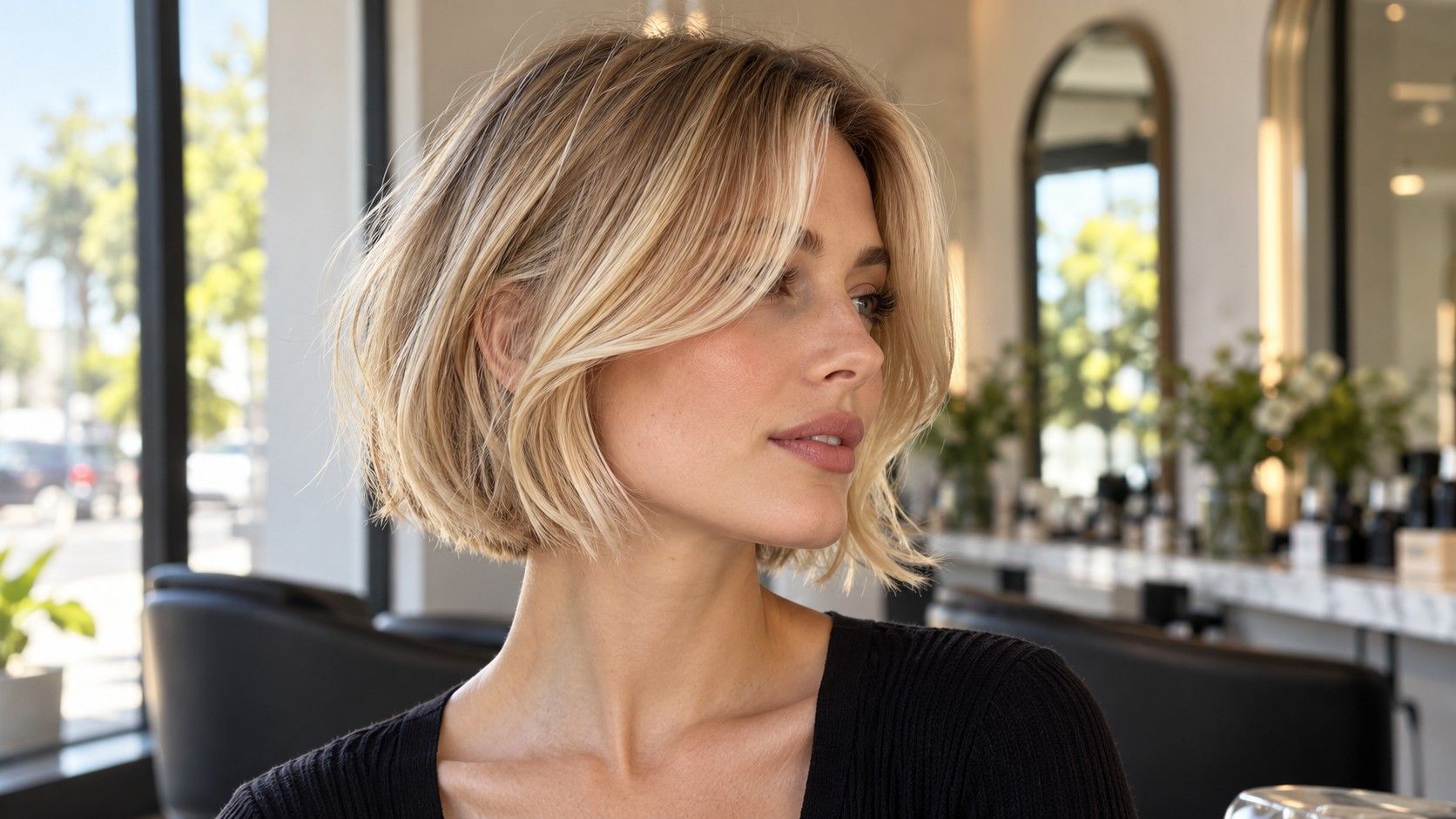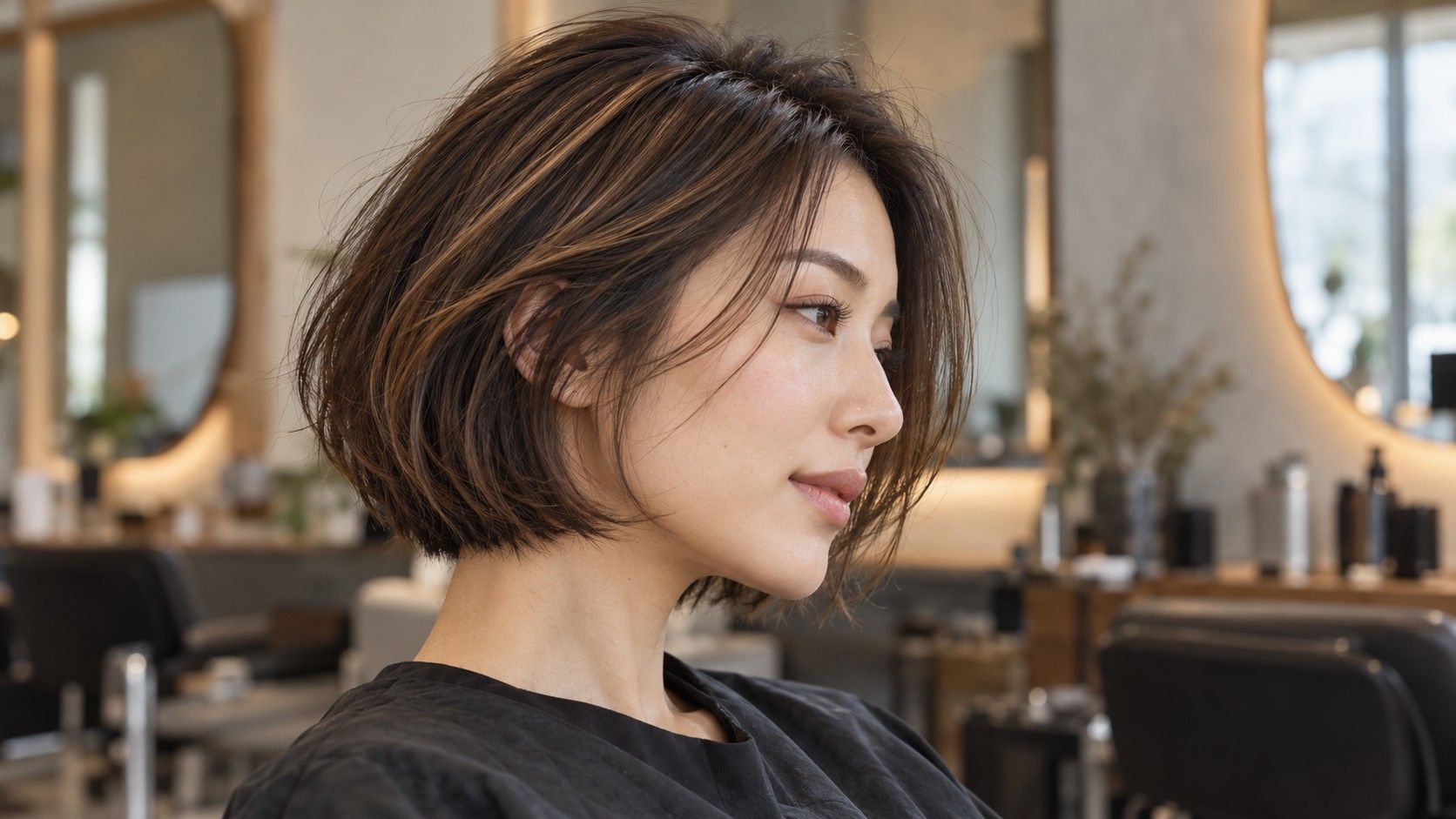
Searching for short hair color for Asian women can be a way to find references that feel closer to your own appearance. The difficulty is that a broad label tells a colorist very little about the hair sitting in the chair. Starting shade, density, curl pattern, previous color and the shape of the cut are more useful. Keep the references that help you explain your taste, then look closely at the details that could change the result on your particular bob or crop.
Start with what your hair does on an ordinary morning
Look at your hair after your usual wash and dry, before collecting pictures of a salon finish. Does the fringe lie flat, split or curl away from the face? Does a bob sit close to the jaw, turn out at the ends or expand through the sides? Color placement will be seen through that movement. A pale section that looks narrow on straightened hair may spread across the surface when natural texture returns.
Asian women have many different hair textures, densities and starting shades. Even two people with similar-looking dark bobs may have different strand thickness, growth direction and color histories. Avoid asking for a treatment on the assumption that all hair in a demographic category needs the same approach. Show the stylist your actual hair, including the crown and nape, rather than relying on a front-facing reference alone.
Write down the routine you are willing to repeat. If you part your hair wherever it falls and leave it to dry, placement should be discussed in that context. If you regularly wear a precise side part, say which side. A realistic reference includes how the hair is worn, not merely the color it appears to be under bright lights.
Use the current shade and previous color as the baseline
Begin the consultation with the color you have now, including sections that differ from one another. Natural roots, previously colored lengths and older light pieces may all be present in a short bob. Tell the stylist about past services and at-home color products. If the history is difficult to remember, bring photographs with approximate dates rather than guessing that the hair is untreated.
A large shift from a dark starting shade to a pale blonde is a different commitment from adding a few brown ribbons or changing the overall depth slightly. The practical difference depends on your individual hair and its history. Ask the colorist to assess what is feasible and whether a strand test is appropriate. A screenshot cannot establish the condition of the lengths or promise a particular result.
Be clear about whether your priority is the exact shade, a similar contrast or the general mood of the picture. A reference might appeal because of its dark root and soft highlights, even if you do not need that particular level of blonde. Keeping those priorities separate makes room for an alternative that suits the hair you intend to keep.
Choose between a subtle change and a visible statement
A close-to-base brown can make a bob feel different without creating the same degree of contrast as a pale panel. Fine ribbons may show movement through the surface. A brighter fringe or front section concentrates attention in one area. An all-over change alters the impression of the whole cut. There is no single best choice; decide which part of your reflection you want to notice first.
| Direction | What to look for in references | Question for the consultation |
|---|---|---|
| Close-to-base brown | A small shift in depth or warmth | How visible will the change be in normal daylight? |
| Fine lighter ribbons | Separation between darker and lighter pieces | Will this pattern show on my usual texture? |
| Brighter front section | Contrast around the fringe or temples | What happens when I tuck or pin the front back? |
| All-over contrasting shade | A consistent effect across the whole shape | What maintenance does the root contrast involve? |
Compare photographs at similar lengths. Broad ribbons on a shoulder-length style may not translate neatly to a crop with only a little length on top. Likewise, an understated highlight pattern may be difficult to see in a small front-facing selfie. Ask for examples that show the back and sides, and check whether the hair is still or deliberately lifted to reveal the color.
Match the placement to the bob, crop or fringe
A blunt bob puts emphasis on the perimeter. More even color can support that clear outline, while differences in depth can break it up visually. A softly layered bob has more moving pieces, so the relationship between the lighter surface and darker underside may matter more. Tell the colorist whether you like the outline to look dense and graphic or less uniform.
With a pixie or cropped cut, distinguish the close sides from the longer top. Color on the shortest areas may be removed at a subsequent haircut, while a longer fringe retains it. If you are considering an undercut, show how you wear the top when it is down and when it is pushed away. A hidden color section needs enough exposure to produce the effect you are expecting.
Fringes deserve their own conversation. A continuous bright fringe, a few lighter strands and a dark fringe above lighter sides create quite different frames. Include glasses if you wear them, and check the style from the angle you usually see in a mirror. A color that looks balanced with the fringe arranged carefully may feel different when its natural split returns.
Book the cut and color with the final length in mind. If a large amount is coming off, confirm how the stylist plans the two services together. Uncertainty between a chin bob and a short crop can change which areas are worth coloring at all. Settle the shape before committing to a detailed placement.
Compare warmth against your own preferences
Brown, red, blonde and fashion shades all contain many variations. A reference called chocolate may look neutral on one screen and distinctly warm on another. Describe what you see: a soft reddish cast, a muted brown, a creamy light section or a strong copper fringe. Specific observations are easier to discuss than a label that means different things to different people.
You do not need an ethnicity-based rule or a seasonal category to have a preference. Consider the contrast you enjoy with your brows, the clothes you wear most often and the makeup you actually use. Some people want their hair to be the strongest color in the frame; others prefer a quieter change. Compare references in that context rather than trying to pass a universal test of what is flattering.
Check images for colored lighting and filters. A warm indoor lamp can change how a brown appears, while a highly edited image may have very little useful detail in the darker areas. Bring a few consistent examples and one you dislike, explaining why. If you use a virtual preview, treat it as a way to discuss appearance; it cannot establish which chemical result is achievable or how the shade will wear.
Agree on upkeep before the first appointment
Ask what the color is likely to look like as roots appear, as the tone changes and after the next trim. Those are three different changes. A short cut can remove part of a color design quite quickly, but the remaining lengths still carry their previous treatments. Having shorter hair does not make every color plan simple to maintain.
Discuss the likely appointment types, time and cost with the salon instead of assuming a fixed touch-up schedule. Say how often you realistically want to return and how much visible regrowth you are comfortable with. A darker root may make contrast look intentional, but it still needs an agreed plan. Ask which home-care products suit your specific result and how to use them according to their directions.
Before the service, ask about the salon’s consultation and testing requirements for the products involved, and mention any previous reaction to hair color. Let the professional assess suitability in person. This is a better use of the consultation than trying to reproduce a color formula from a photograph or treating a digital image as a technical prescription.
Leave with a clear description of the shade and placement, plus a photograph in ordinary light if possible. At the next visit, report what happened during your normal week: the front section disappeared when tucked, the root contrast was comfortable, or the ribbons showed only after styling. Those details make the next decision personal to your hair and routine, which is where a useful color plan begins.