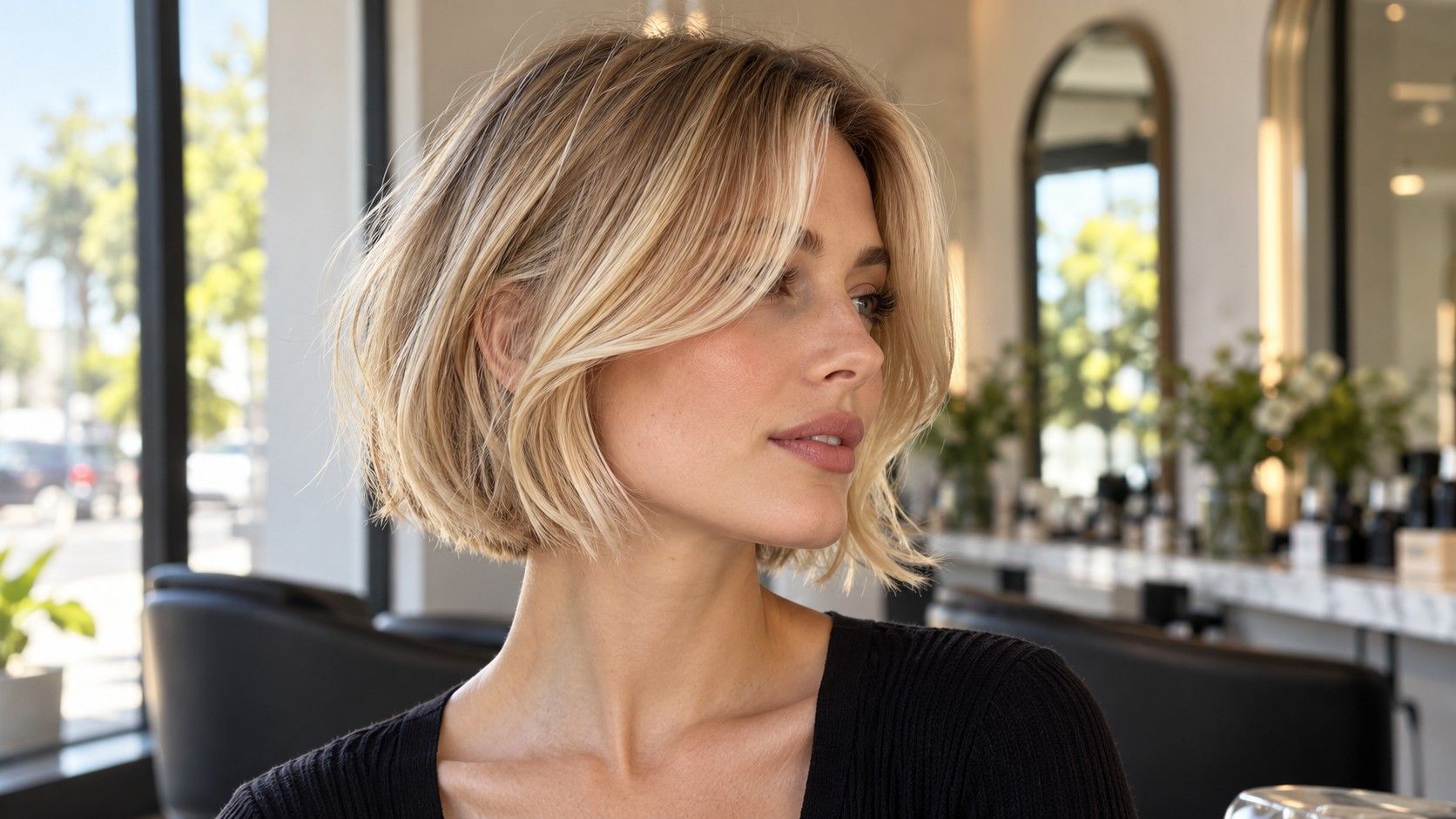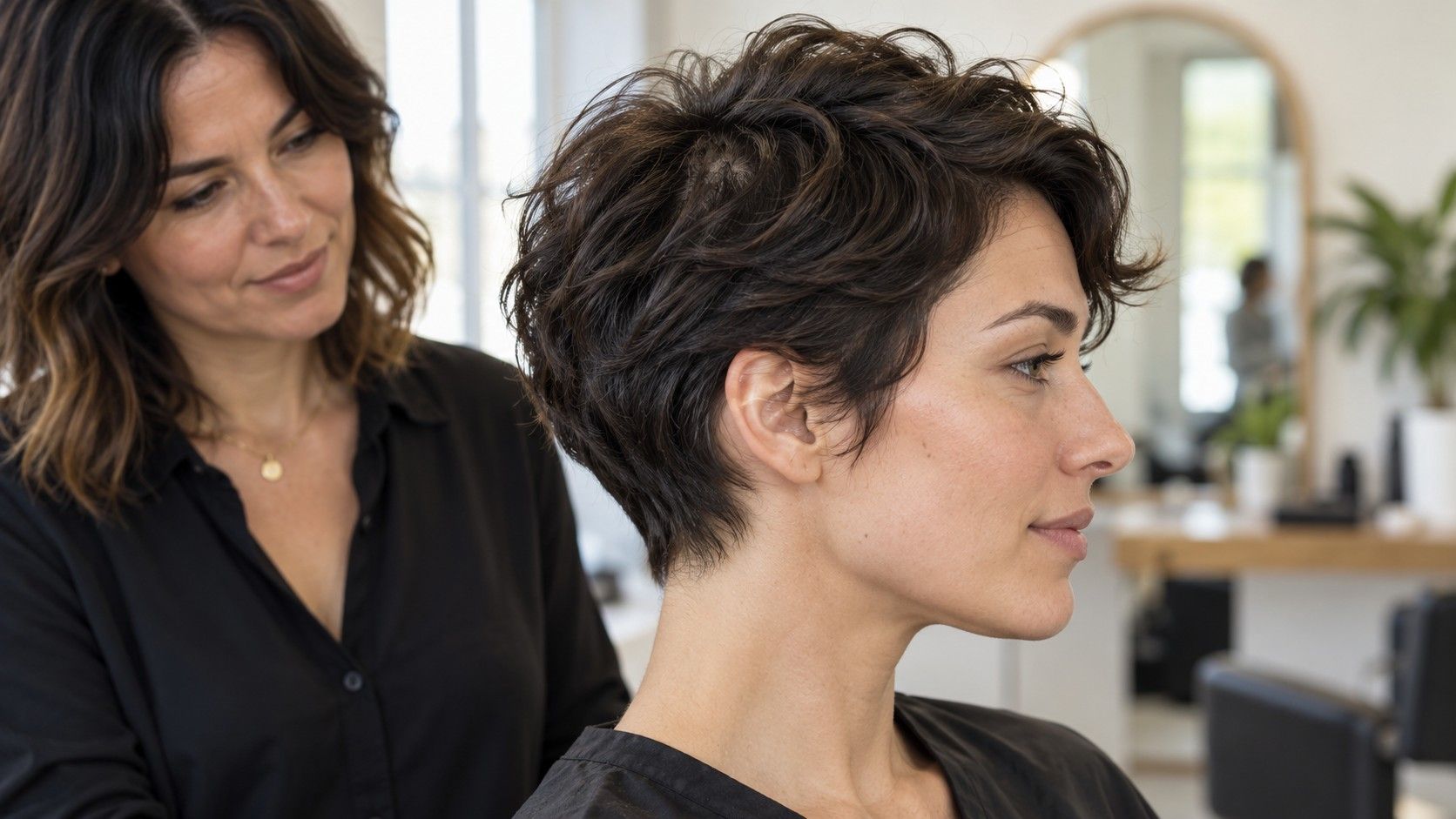
A short haircut exposes details that longer hair can keep under its own weight: a lifting crown, a strong part, a nape that grows sideways. Useful hair style analysis starts with those everyday observations. Before choosing between a bob and a crop, look at how your own hair behaves after an ordinary wash, where it feels full, and which parts already demand attention.
Look at your hair after your usual wash
Begin on a day when you can leave your hair in its normal state for a few hours. Follow your familiar wash routine, then let it dry in the way you expect to use after the cut. If you normally air-dry, a carefully straightened starting point tells you less about the haircut you will actually live with. Take a front, side and back photo once it is dry, keeping the camera roughly level with your head.
Look for differences within the same head of hair. Your front may lie fairly straight while the back forms bends, or one side may curl more tightly than the other. Notice where the pattern begins along the strand. A wave that starts below your chin may disappear when you choose a jaw-length bob; a bend close to the root can remain part of a much shorter shape. Neither outcome can be judged reliably from the word wavy alone.
Repeat the observation the following morning if that is a common styling day for you. Sleep can flatten the crown, fold a fringe or turn one side outward. The useful note is concrete: the left side turns out above the ear after sleeping, for example. You do not need a formal texture label to explain that. Show the photos to your stylist and ask how the proposed length might change the behavior.
Separate strand thickness from the amount of hair
Fine describes the feel and diameter of individual strands; density describes how much hair occupies an area of scalp. You can have many fine strands or fewer coarse ones. That distinction matters when choosing short layers. A large amount of fine hair may need shaping to keep a bob from looking bulky, while a lower-density head can lose its outline if too much is removed from the ends.
Feel a small, clean section gently between your fingers and notice whether the strands feel delicate or substantial. Then look separately at the part, temples and crown under ordinary light. These are observations to bring to a professional, not a precise home measurement. Wet hair, very bright overhead lighting and the contrast between scalp and hair can all make coverage look different. Avoid drawing a dramatic conclusion from one close-up photograph.
Ask your stylist where preserving weight will help the haircut. For a bob, that might mean keeping a fuller lower edge and using restrained layers through the front. For a crop, it may mean leaving enough length at the crown for the hair to lie comfortably. If you have noticed a new or persistent change in density, that deserves appropriate professional advice rather than a haircut explanation invented from a picture.
Map the places that push against your preferred shape
With dry hair, comb the front gently into the position you want, release it and watch where it returns. A cowlick near the hairline may open a fringe on one side. At the crown, several growth directions can form a visible split when the hair is cut too short to overlap. Record where these features sit instead of treating them as a single general problem called difficult hair.
The nape needs a look too. Use a second mirror or a clear back photo to see whether the hairline grows low, curls upward or moves diagonally. A very close nape can expose those directions, while a slightly longer finish may soften them. At the consultation, ask the stylist to show the proposed lower boundary with a comb or finger. This is easier to understand than a vague request for a neat back.
A strong part is another practical feature. If you like changing sides, show how the hair behaves in both positions. Some cropped shapes depend on a deliberate direction, and a fringe designed around one opening may resist another. Decide whether keeping parting flexibility matters more than a particular reference. Do the same check around glasses, hearing devices or regular headwear, where pressure and tucking can change the way short sides sit.
Check the crown, ears and neckline before choosing length
Short is not a single measurement. A jaw-length bob, a long pixie and a close crop leave very different amounts of hair at the ears, crown and nape. Pick each boundary separately. You might want an exposed neck but enough length to tuck the sides, or a compact outline with a longer crown. Point to those areas on yourself and use a reference photo to make the combination clear.
Consider what happens when you move. Tilt your head, put on your glasses and tuck one side behind the ear. A bob that sits neatly while you face forward can catch on a collar or turn outward against the shoulder. A longer crop may look soft around the ear until the arm of your glasses pushes it upward. These details do not rule a style out; they help identify where a small length adjustment could make daily wear easier.
Ask how much of the proposed shape comes from the cut and how much comes from styling. A lifted crown in a photograph may involve a blow-dry or product. A smooth curved bob may have been brushed under. Request a finish close to your usual method before the final check. If the shape needs tools every morning, you should know that while you still have the chance to discuss a less demanding version.
Compare your observations with two or three real options
Keep the shortlist small enough that your stylist can explain the tradeoffs properly. Each option should answer a specific wish: retaining an ear tuck, reducing weight at the back, or keeping the fringe out of your eyes. The table connects common observations with consultation questions rather than prescribing a haircut from a single feature.
| What you notice | What to compare | Question for the stylist |
|---|---|---|
| Front bends upward when it dries | A longer front against a short fringe | Where will the shortest piece rest without tension? |
| Light coverage at the front corners | A fuller bob edge against extensive layers | How much weight can stay around the face? |
| Crown splits in several directions | Extra overlap against a close crown | What will happen after air-drying? |
| Heavy sides behind the ears | Controlled shaping against an even outline | Can the bulk change while keeping tuckable length? |
Choose references with visible side and back views whenever possible. One front-facing image cannot show the neckline, and a hand placed through the hair may hide the actual density. Include an example of something you dislike, with a precise reason. Saying that you do not want a high exposed nape gives the consultation a clearer limit than saying that a whole style looks wrong.
Leave with a haircut request you can explain plainly
Write a few sentences before the appointment: the length you want to keep, the areas you want changed, your usual drying method and the amount of maintenance you will accept. For example, a jaw-length bob with enough front length for an ear tuck and a crown that can air-dry is a practical starting request. Your stylist can then assess whether those preferences work together on your hair.
If you also want personal color hair style analysis, keep the physical haircut discussion clear before adding shade choices. A brighter color will not alter a cowlick, and a darker shade does not restore hair that has been removed from the outline. Settle the shape and routine first, then consider color as its own decision. This makes it easier to understand which change is doing what.
After the cut, use your own first wash as the next piece of evidence. Photograph anything that is awkward and note whether it involves length, a drying direction or product buildup. Avoid judging the whole haircut from one rushed morning. A follow-up can then address a particular corner or section, while preserving the parts that already work. The purpose of analysis is a more useful conversation, followed by a haircut that fits your actual days.