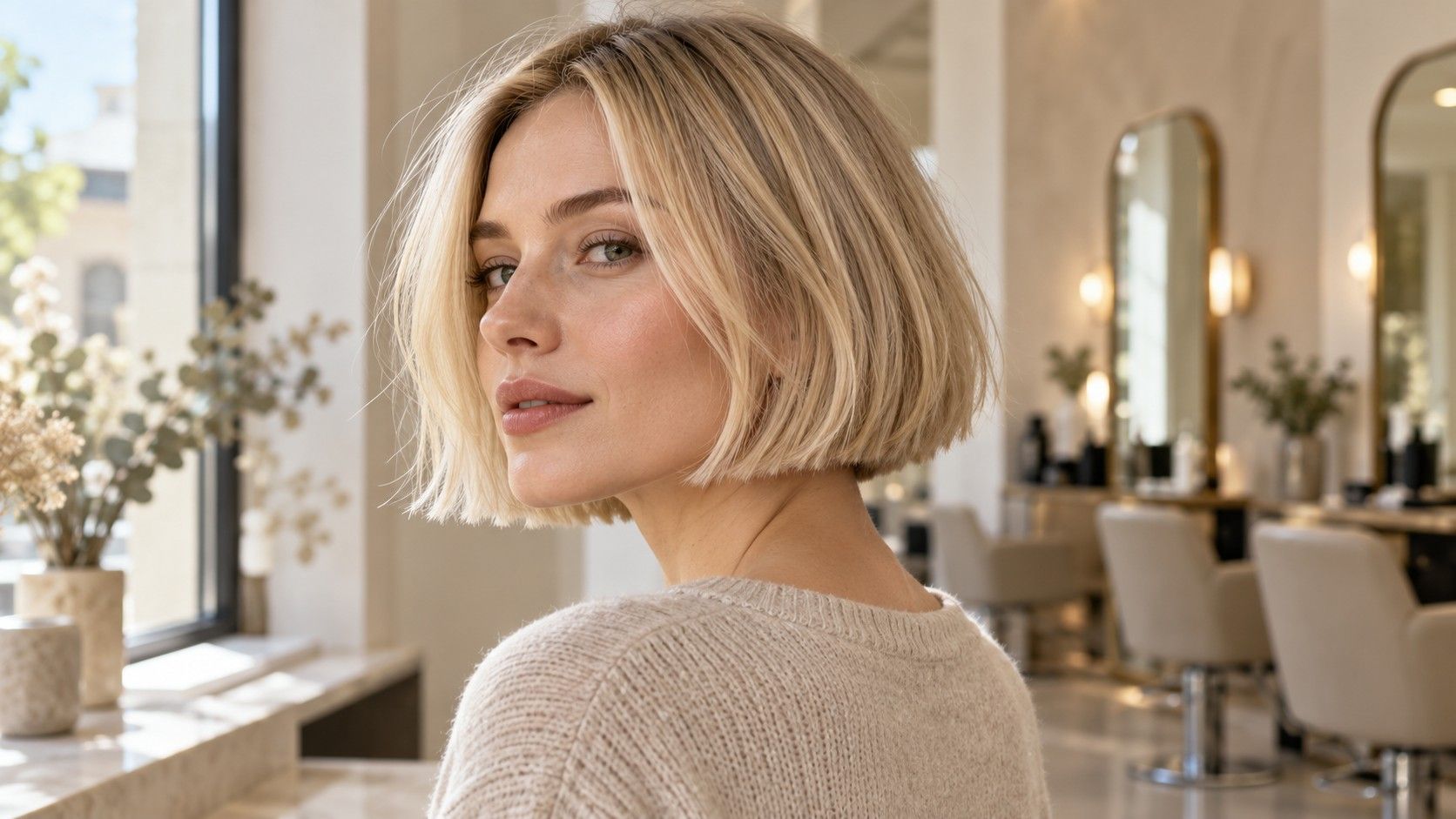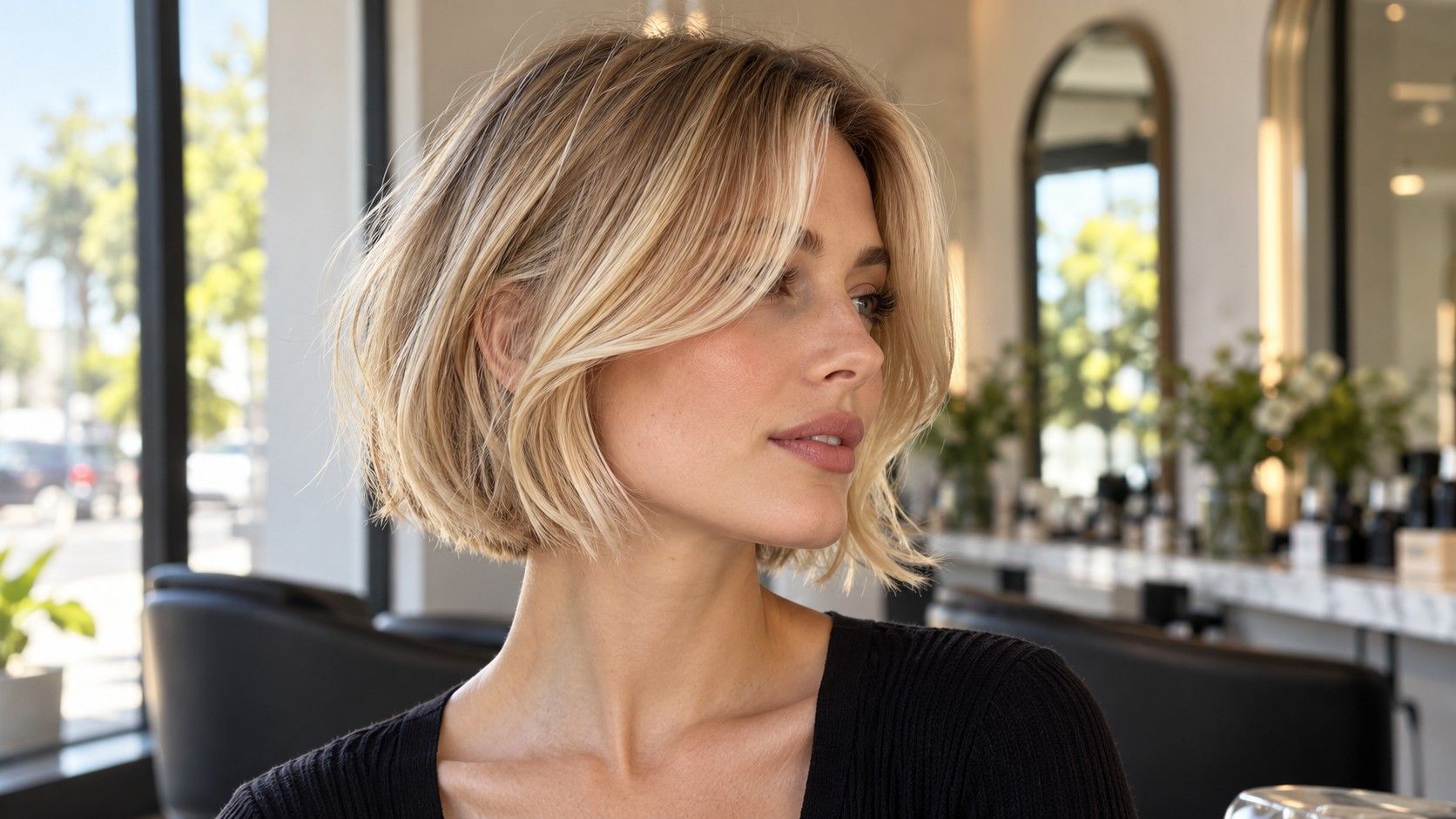
Summer color hairstyles can mean two different things: cuts for warm weather, or hair ideas associated with a “summer” seasonal palette. Here the focus is the second meaning, especially softly blended, cool or muted references for short hair. A palette can give you words for an effect you like. It cannot tell you which haircut you must choose, or establish that your current color needs correcting.
Use the palette to describe softness, not to pass a test
In many seasonal styling systems, summer palettes favor relatively muted colors and softer transitions. The exact divisions vary between systems. Rather than trying to prove a category, ask what you want your hair to look like: less contrast at the root, a quieter overall shade, subtle changes through a fringe or simply a softer outline around your face.
“Muted” does not automatically mean very light, and “cool” does not mean every photograph should look silver. A soft brown bob and a subdued blonde crop can share a gentle visual effect while differing considerably in depth. Save references for those specific qualities. If the word ash leads you to photographs you dislike, explain the appearance you want without relying on that word.
A seasonal label is an optional styling convention, not a scientific diagnosis of your appearance. It should not overrule your enjoyment of a warmer shade, a strong fringe or your natural hair. You can use a restrained color palette with a very precise cut, or choose soft layers while keeping a deeper shade.
Start with one sentence: “I want a gentle transition between the roots and the rest of my hair,” or “I like the low-contrast effect in these photographs.” Those statements leave room for an assessment of your hair instead of asking a colorist to recreate a category whose meaning may differ from yours.
Compare lighter and darker references on equal terms
A pale blonde under bright salon lighting can look much softer than the same hair photographed outdoors. Before deciding that lightness is the answer, collect a darker reference with a similar cut and finish. Compare a bob with another bob, or a crop with another crop. Changing length, lighting and color simultaneously makes it difficult to identify the feature you actually prefer.
Watch the background. Fine pale ends can disappear against a white top, while a dark background makes every small strand visible. A picture with a blurred edge may suggest a softness created by lighting rather than by the haircut. Look for images where the perimeter and root area can both be seen clearly.
| Detail to compare | Useful check | What to say at the salon |
|---|---|---|
| Overall depth | Compare light and medium-depth examples of the same cut | I like this level of lightness |
| Root transition | Look at the parting and the temples | I prefer a gentle change near the roots |
| Muted appearance | Check another photograph in ordinary daylight | I want the color to look subdued rather than bright |
| Soft outline | Inspect the ends independently of the shade | I like the movement around the ears |
For photographs of yourself, use similar indirect daylight, a consistent background and the same camera position. Skip beauty filters. These images can help you compare preferences, but they will not predict an exact salon result. Screens and cameras shift color, so show your references as examples of an effect rather than a formula to reproduce.
Choose the short shape for the hair you have
A muted color does not require a delicate, heavily layered cut. If your ends already look sparse, a more continuous bob perimeter may be the part of the reference that makes the result appealing. Ask where weight would remain and whether the side sections have enough density for the intended outline. Fine strands and low density are different issues.
For a crop, look at the fringe and the ear area. Softness may come from a longer, movable front or a gentle connection between the top and sides. It does not necessarily come from removing more hair everywhere. If you want some coverage above the ears, say how much, especially if you wear glasses or tend to tuck the sides back.
Natural waves can create movement through a short shape without matching the smooth finish of a reference. Decide whether you like that movement. A blunt bob that bends outward at the jaw may feel relaxed; the same bend may frustrate someone expecting a level line. Discuss how the proposed cut will look after your usual drying method before deciding on the color.
At the crown and nape, growth direction can be more influential than a palette. A very short back exposes hair that lifts or turns sideways. Extra length may affect how it settles, but no general rule promises a particular result. Have the stylist inspect those areas and show you the shortest point before the cut begins.
Check whether your current color needs changing at all
Try separating the haircut decision from the color decision. If you like the depth and variation already in your hair, a change in length or fringe may create the softer impression you wanted. Cutting away old ends can also change which part of the existing color remains visible. Ask how your present placement will look in the proposed shape.
You may find that the “summer” quality you like is actually the styling: a gentle bend, less volume at the crown or a fringe brushed away from the face. Compare your hair in two simple finishes before booking a major color change. That will not settle every question, but it can prevent a haircut preference from being mistaken for a shade problem.
If you do want color, show the colorist your current hair and explain previous coloring. A reference image cannot reveal the route your own hair would need, the appointments involved or the achievable result. Let the consultation establish those points. Avoid assuming that a quiet-looking shade is necessarily straightforward to obtain or maintain.
Natural gray can also be part of the color you choose to keep. Discuss whether you want to preserve its variation, make a different change around it or leave it alone. A palette label does not require hiding gray or making every section uniform. The useful comparison is between the appearance you enjoy now and the one you want to live with.
Plan how the soft effect will look as hair grows
Blended-looking color can still require appointments. The contrast with your natural roots, the placement and the intended finish all affect how growth looks. Ask what the parting and temples are likely to show between visits. A reference with a soft root area may be helpful, but it is not a promise that your own result will need little attention.
Shape has its own timetable. A fringe can reach your eyes before a bob feels too long, while a close crop may lose the ear outline you liked. Tell your stylist how often you realistically want to return and which changes bother you most. It may be possible to choose a less exact edge if you are comfortable with a more variable shape.
Ask for a cost estimate tied to the actual proposal, including which visits address the haircut and which address color. Do not infer cost from whether the result looks subtle. You need enough information to decide whether the desired appearance fits your routine, not an abstract claim that a certain palette is low maintenance.
The home finish matters too. If the reference has a soft bend created with tools and you normally air dry, ask what the cut will do without that step. Watch the salon finishing routine and identify the part you could repeat. A short style should make sense on a rushed morning as well as in the appointment photograph.
Keep the references flexible when a rule feels restrictive
If your favorite photograph falls outside an online palette recommendation, keep it. Identify why it appeals: the warm note in the fringe, a darker outline, a very straight edge or the way the back clears the neck. A reference is most useful when it explains a preference, and least useful when it becomes evidence that you are choosing incorrectly.
Bring two or three images with clear roles. One might show the short bob length, another the muted color and a third the amount of ear coverage. Include a current photo in your usual clothes. This gives the stylist a practical setting for the haircut without requiring every example to belong to the same seasonal category.
You might say: “I like a softly blended color with no large jump at the roots. For the cut, I want enough length to tuck the sides and a back that stays clear of my collar. I wear the natural wave most days.” If a cooler reference is only a tentative idea, say so. That is useful information, not a failure to commit.
Finish the consultation by confirming the length, where the color difference would sit and the maintenance you are accepting. Keep the parts of the summer palette that help you describe your taste. Leave room for your texture, existing color and ordinary habits to shape the final choice.