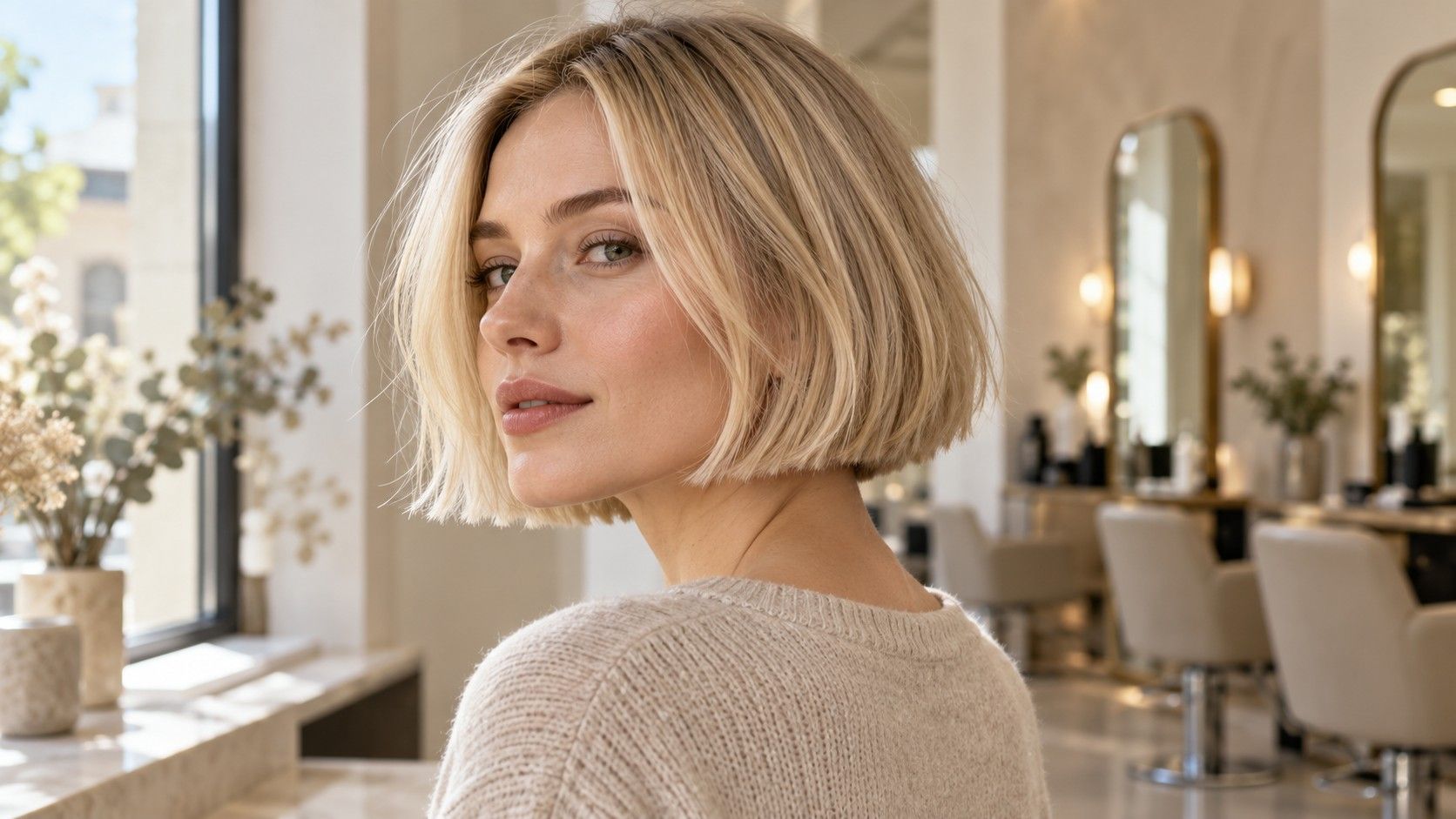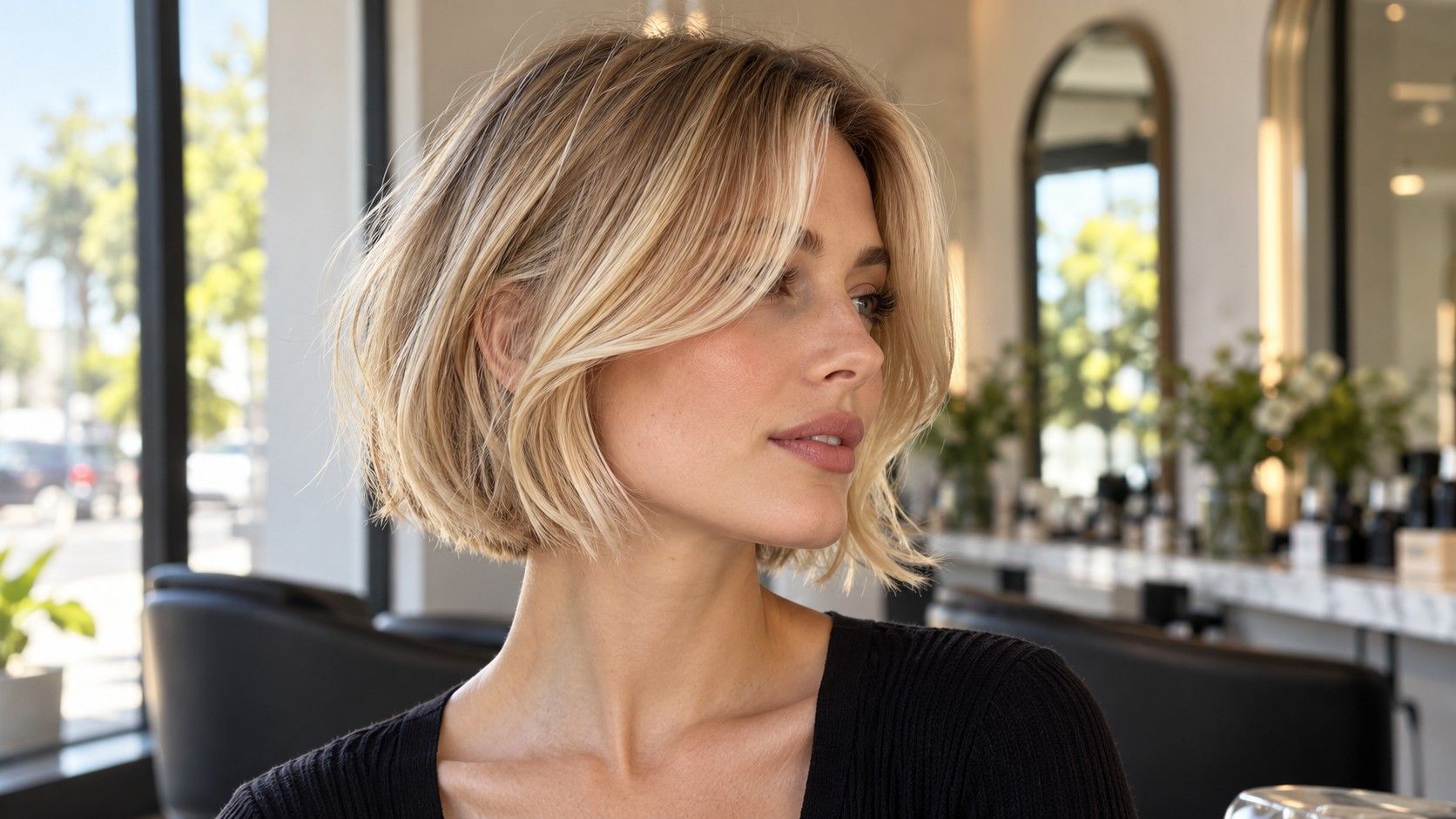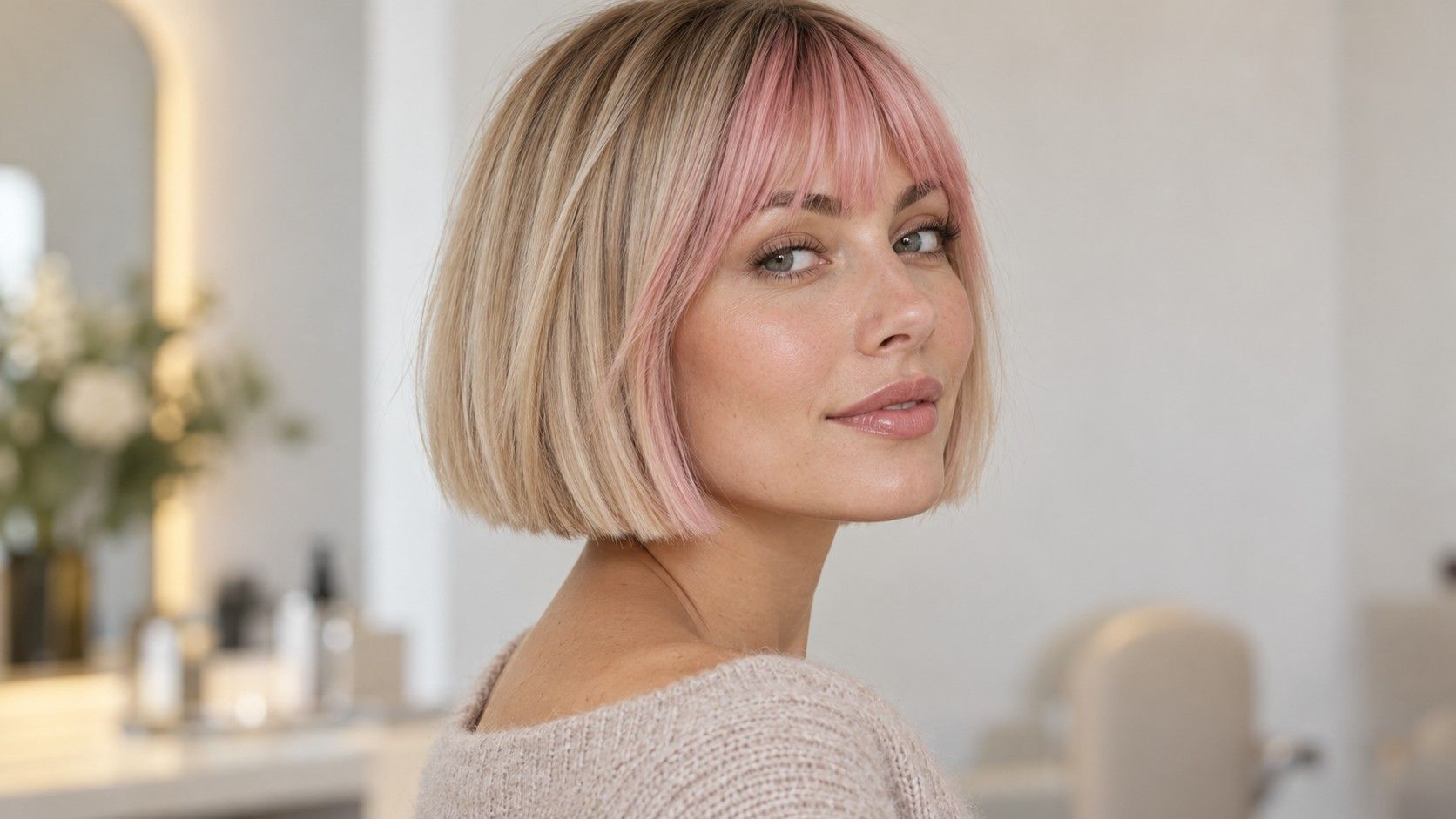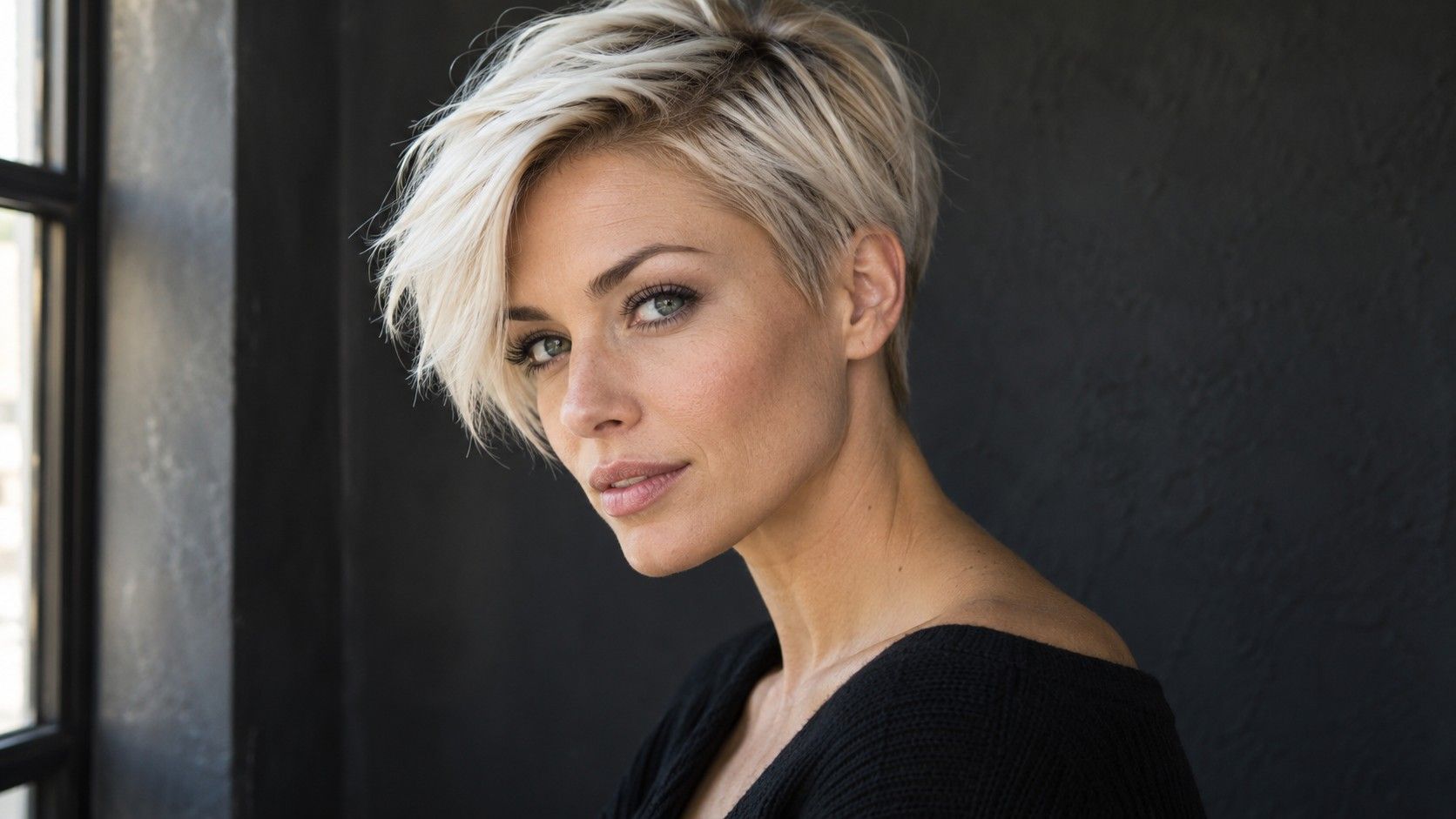
A white blonde crop can look clean and graphic, while the same pale finish on a bob can seem soft or almost weightless. The difference comes from the cut, the lighting and the darker details around it. When browsing white blonde hair styles, separate the color from the silhouette before deciding what you want. A useful reference needs to show both. It should also leave room for a conversation about your starting shade, previous color and the maintenance you are prepared to arrange.
Check whether you like the shade or the silhouette
Cover the hair color in your reference mentally and examine the shape. Is the top long enough to sweep aside? Does the fringe end above the brows or continue diagonally toward the cheek? Are the sides closely cropped, or merely tucked away? Pale hair against a pale background can hide these details. A second photograph against a darker wall may be more useful than another highly polished front view.
Then look at the color separately. White blonde may describe an almost neutral pale shade, a cooler silver cast or a creamy result with little visible depth. Those are different targets. Bring examples and identify which part you want: the pale overall impression, the cool tone or the contrast against a darker root. A shade name alone leaves too much open to interpretation.
Watch for strong light that turns the brightest areas into a flat white shape. If individual strands and edges disappear from the photograph, you cannot reliably judge either tone or texture there. Keep the picture for its overall mood, but add a reference with visible detail. A virtual preview can help compare appearance; it cannot determine what result is achievable on the hair itself.
Give a pale crop a shape you can recognize
A pixie with a longer top offers several ways to show definition: a side sweep, a broken fringe or a lifted front. Each needs a different amount of length and a different routine. If you prefer to leave the hair alone after drying, show how your growth direction behaves. A pale color does not make a stubborn crown or a fringe that separates stop affecting the outline.
A short blunt bob relies more on its perimeter. Against a dark top, the pale edge may read clearly; against a light blouse, it can look softer. A few layers or a rounded interior can change the appearance again. Compare the cut with your usual clothes and background rather than judging every detail from a studio image with a carefully chosen backdrop.
| Shape | Where definition comes from | Practical detail to check |
|---|---|---|
| Pixie with a long top | Length contrast and the direction of the fringe | How the top falls without being lifted |
| Close crop | The hairline, head shape and small surface changes | The view around the ears and nape |
| Blunt bob | A clear edge and the overall width | Whether the ends sit as intended when dry |
| Layered bob | Movement between surface pieces | How much styling makes the layers visible |
Ask to see the back and sides before settling on a shape. The front of a pale bob may look much shorter because the rest is tucked behind the ears. A crop may have a noticeably longer crown than the front image suggests. These are haircut decisions, so discuss them before the color appointment is planned.
Let your starting hair determine the feasible plan
White blonde is an appearance, not a promise of a single service. The starting shade and history of the lengths matter. Tell the colorist about earlier color, lightened sections and at-home products, even when a short cut has removed much of the old hair. The strands that remain still need to be assessed directly.
Bring a clear photograph of the current hair and explain how much length you want to keep. Ask whether the intended result is realistic and whether a strand test is appropriate. The answer may involve a different shade, a staged approach or leaving some depth in place. Do not book around an assumption that a short length makes every transformation straightforward.
If the proposed plan does not fit your time, budget or comfort with upkeep, ask for a less extreme alternative. A creamy blonde with depth or a pale top over darker sides might offer the part of the reference you enjoy. That discussion should be led by an assessment of your hair, rather than by trying to reproduce a formula found beside an image online.
Decide what the darker areas should do
Dark roots can create an intentional contrast with white blonde lengths. On a short crop, however, even a small darker area may occupy much of the visible hair. Be specific about the balance you like. Point to where the darker section ends in a reference and ask how that proportion would look at your chosen length.
There are other sources of contrast too: brows, an exposed nape, an undercut and even the shadow beneath a longer fringe. You may enjoy the strong outline they create, or prefer a gentler transition. Neither choice needs a rule about age or skin tone. Look at the whole face and haircut in ordinary light and decide where you want the eye to go.
Compare the style with the hair pushed back and with it resting naturally. A darker underside may be invisible in one position and prominent in another. A deep side part can reveal a different area of root from a central part. Tell the colorist if you change your part frequently, wear clips or tuck both sides behind the ears.
Planned root depth still needs maintenance discussions. Ask how the initial design is expected to grow and what service would restore it. A root shadow in an inspiration photo is not evidence that you can leave the look untouched for a particular number of weeks. Your own contrast and preferred finish will determine what feels acceptable.
Keep the daily finish within your routine
A polished salon photograph can make a pale bob look sleek from root to end. At home, the same hair may have waves, loose texture or different directions around the face. Decide which version you actually want to maintain. Bring a photograph of a normal morning so the stylist can discuss the cut and the color in the context of your routine.
Ask which products and handling are appropriate for the assessed condition of your hair. Follow the recommendations and product directions rather than adding a strong toning routine because the shade looks cool. Pale, grey and violet casts are different appearances; more toning product does not automatically move the result closer to the reference.
Also ask how to style the shape with the tools you own and the time you will use. A quick demonstration of how to direct a fringe can be more valuable than a long list of products. If the cut only looks right to you when the top is carefully lifted, make sure that step fits your weekday mornings. White blonde will not compensate for a silhouette you dislike when unstyled.
Make the next appointment part of the decision
Color and haircut maintenance can move at different speeds. A close side may need a tidy-up while the longer top still sits well. Trimming can remove lighter sections and alter the original balance. Before booking, ask how the color placement and cut will be coordinated over the next few visits, including what happens if you decide to grow the style.
Request a realistic estimate for the initial service and the likely follow-up services. Discuss your tolerance for visible roots, changes in tone and the time available for appointments. Avoid using a universal interval from someone else’s routine. Their starting shade, cut and expectations may be very different from yours.
Take a photograph in neutral light after the appointment, keeping the full outline visible. When you return, explain what you liked as the hair changed: perhaps a little depth made the crop easier to wear, or the bright fringe felt better once it softened. That gives the colorist a more useful direction than asking for the same white again. The best reference is the version you enjoyed living with.