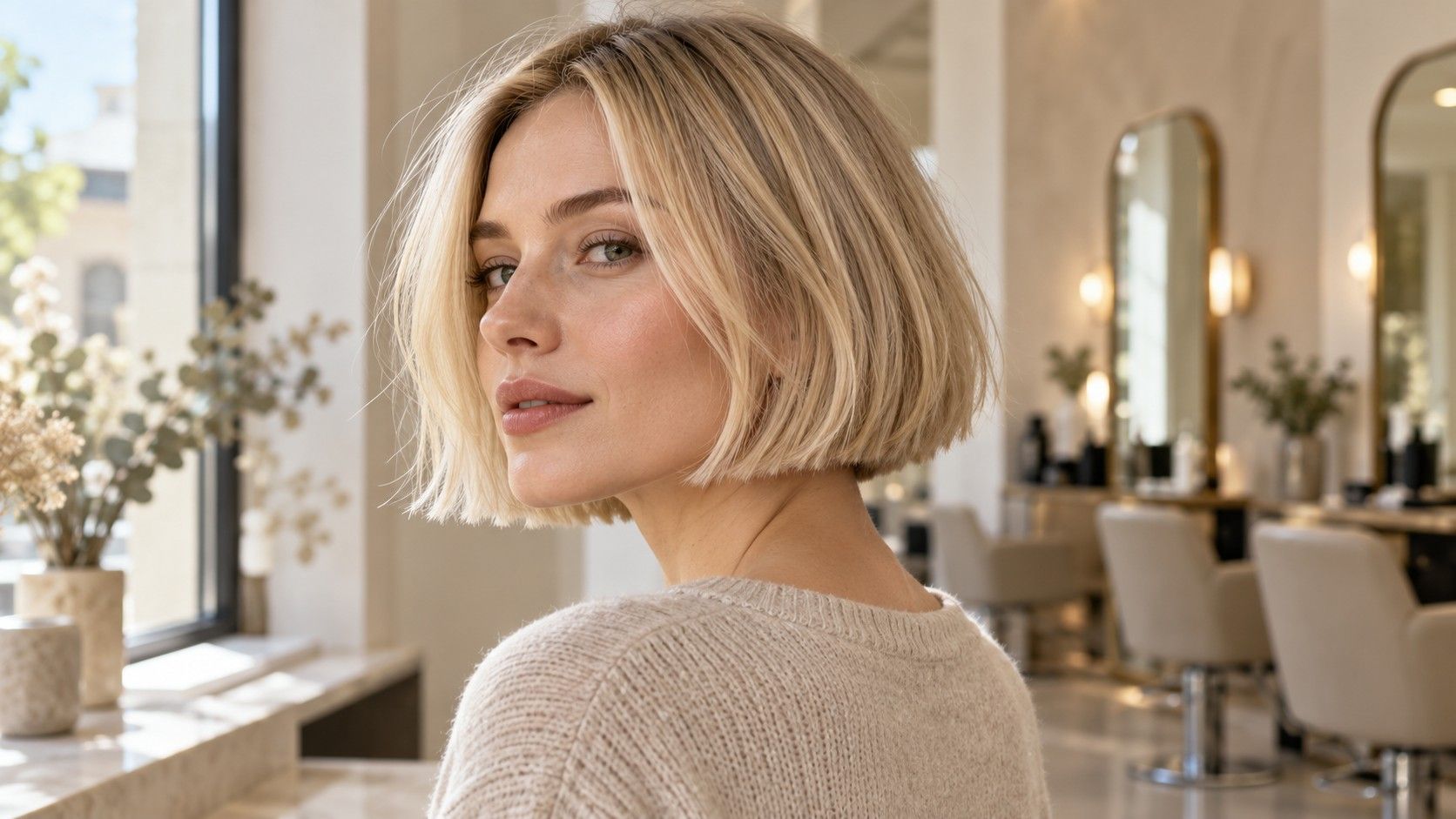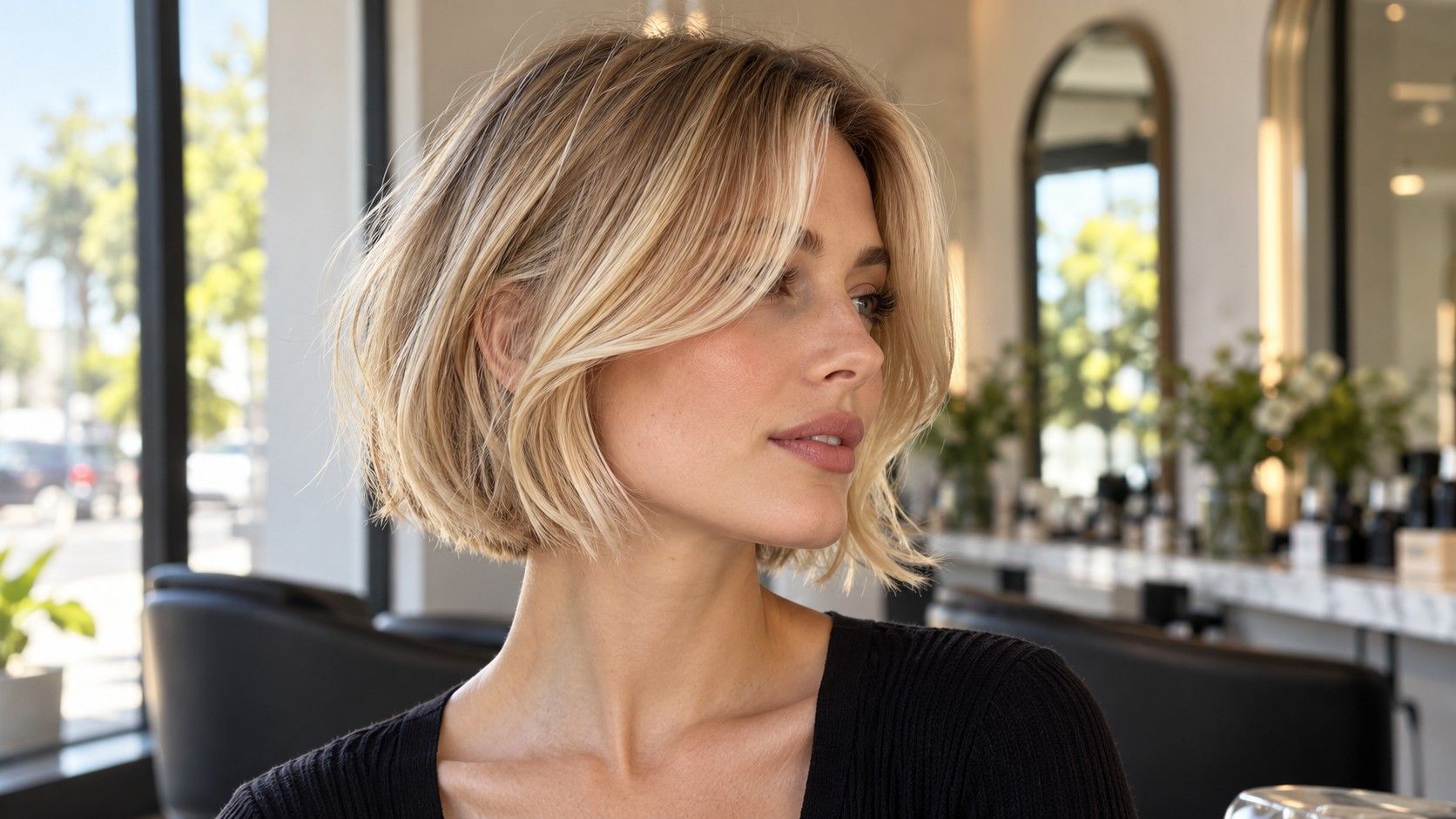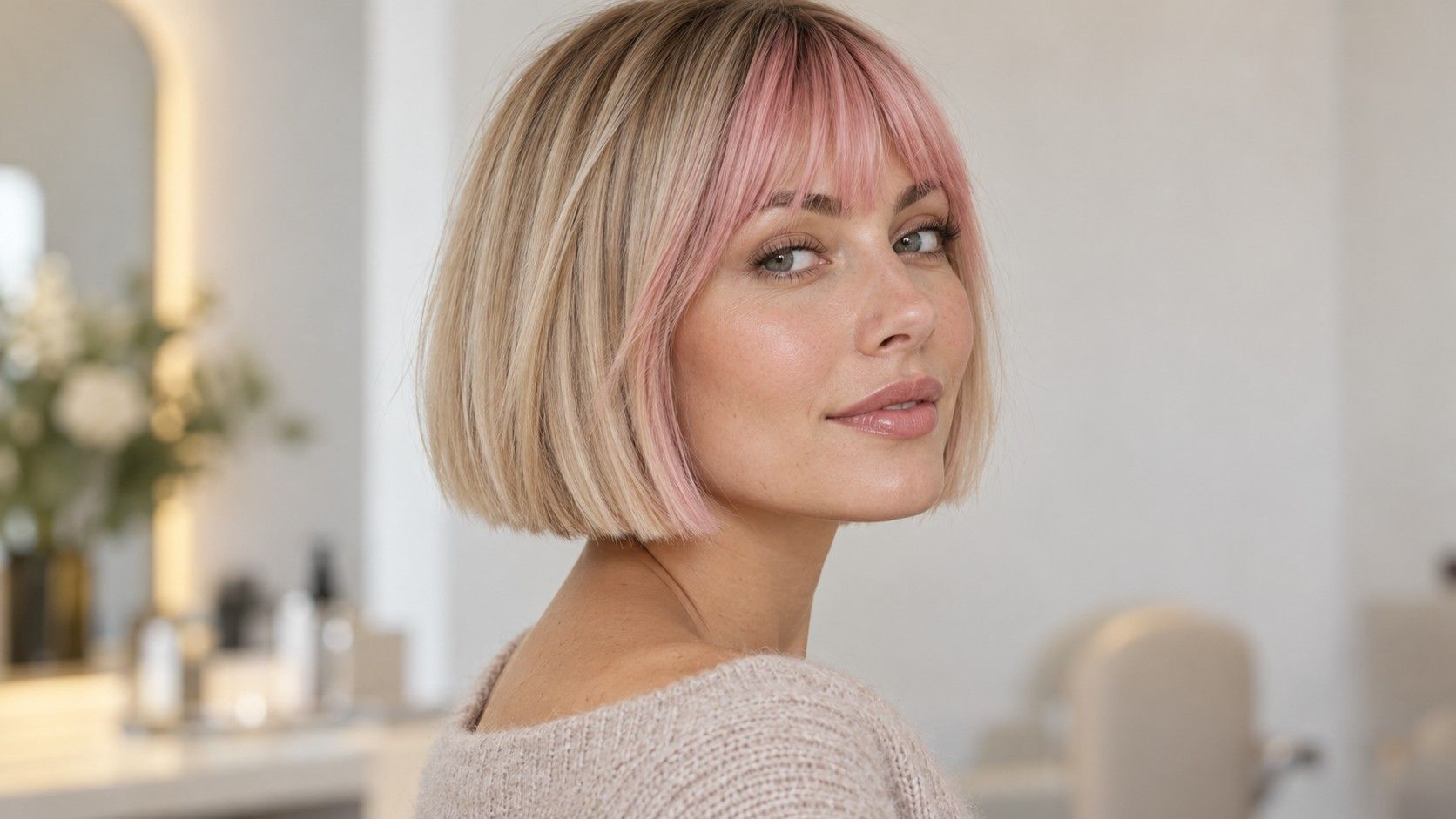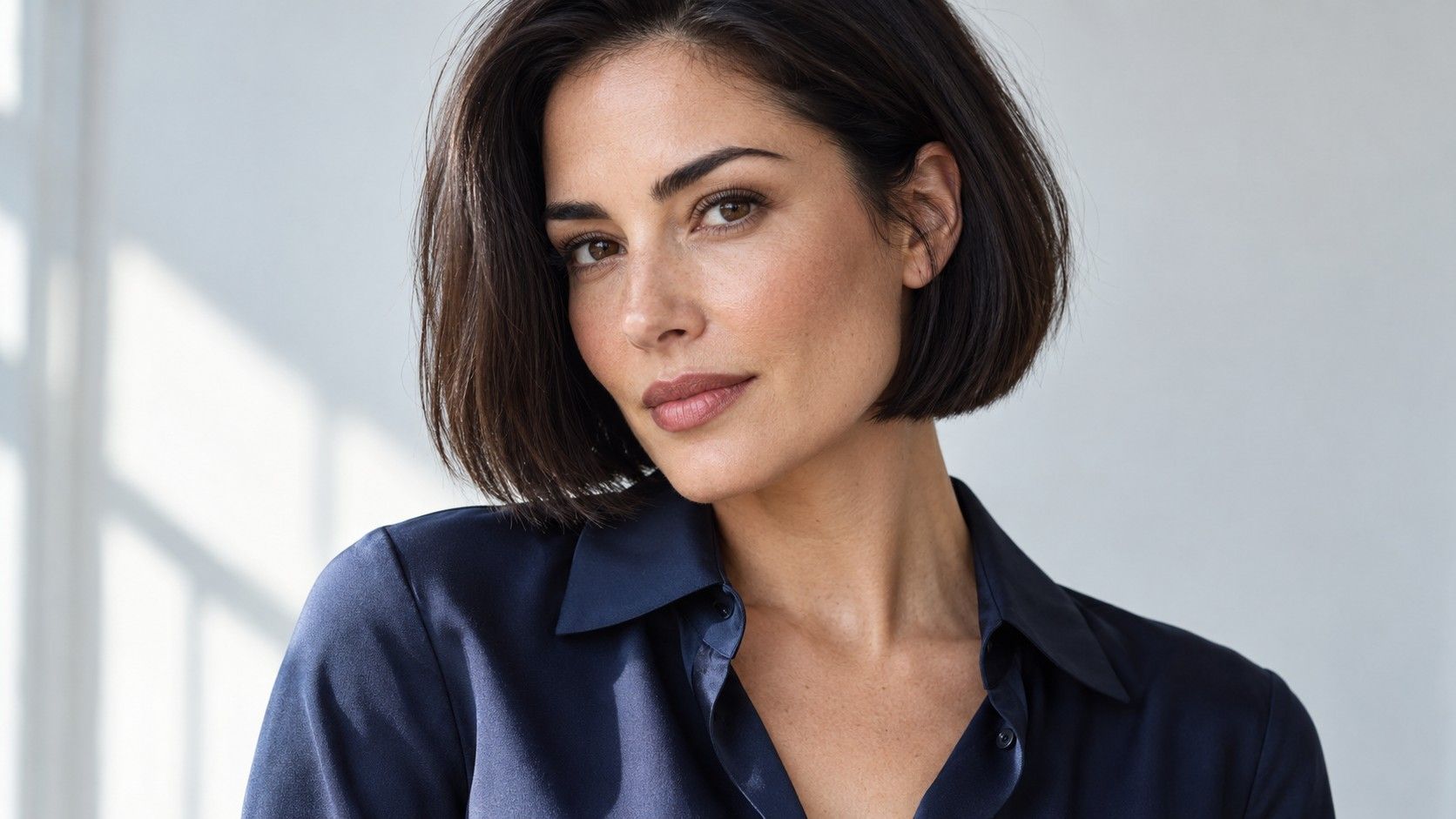
Searching for winter color hairstyles often brings up dark bobs, pale blondes and sharply defined crops. In seasonal style systems, “winter” commonly refers to a cool, clear, contrasting palette. Treat that as a source of visual ideas, not a diagnosis or a rule about which haircut you can wear. The useful question is how much contrast you want near your face, and whether you want the haircut itself to look equally defined.
Separate a strong shade from a sharp outline
A deep color and a precise haircut are two different decisions. A dark bob with a level perimeter creates a clear lower line; the same shade in a loose, wavy crop gives a less controlled outline. A pale pixie can look just as graphic when its edges are close and deliberate. You can borrow contrast from a winter-inspired image without copying every part of the haircut.
When saving a photograph, name the feature that attracted you. It might be the difference between dark hair and a white collar, the uninterrupted shine through a bob or the separation between a pale fringe and deeper sides. If you cannot tell whether the appeal comes from the color or the cut, cover part of the image and inspect the remaining outline.
There is no requirement for high color contrast to come with very short, severe edges. A long fringe, rounded back or soft bend can make a strong shade feel more relaxed. Conversely, a subtle shade change can sit within a sharply cut crop. Decide how you want each element to behave before assuming the complete photograph is the only workable option.
The same applies to seasonal labels. Different systems divide their palettes differently, and an online result does not determine your preferred level of boldness. If a dark shade feels too heavy for you, that preference matters. There is no practical benefit in choosing hair you dislike to satisfy a category.
Compare a graphic bob with a softer crop
For a graphic bob, begin with the perimeter. A jaw-length line is immediately visible around the face, while a longer bob leaves more hair below it. Look at the back as well: a low, continuous edge differs from a strongly graduated shape. Ask whether your hair density can support the fullness you see in the reference without requiring the exact styling used for the photograph.
A crop changes where the eye notices the outline. The temples, fringe and nape become more exposed, so small details at the ears matter. If you like a soft result, choose references that show how those areas connect. A tousled top does not tell you whether the sides are close, tucked or simply hidden by the camera angle.
| Reference feature | What creates the effect | Check before choosing |
|---|---|---|
| Dark, level bob | Continuous perimeter and a deep shade | Does the line stay full at your temples? |
| Pale crop with deeper sides | Contrast in color and length | How visible should the side transition be? |
| Soft dark pixie | Movement through the top with a shorter outline | Will your fringe grow in the intended direction? |
| Defined fringe on a bob | A second visible edge near the brows | How does it sit with your glasses? |
Natural movement can be the deciding factor. A forward-growing fringe may settle easily into a short front but resist a lifted, swept-back finish. Waves can break up a straight perimeter, which may be exactly what you want. Bring a photograph of your usual dry hair and ask which parts of the reference depend on daily styling.
Compare contrast in ordinary daylight
A salon image with a black background and bright face lighting can make contrast seem stronger than it will look in your kitchen. Compare references in several settings. A front-facing daylight picture is useful, but avoid direct sun that washes out lighter sections or deep shadows that hide the ends. Keep the camera position and background similar when comparing your own photographs.
Look separately at depth and temperature. You might like how dark a reference is while disliking its blue-toned appearance, or prefer a pale result without wanting an icy finish. Screen settings and filters make those judgments uncertain. Describe what you see to the colorist and compare physical examples where available, rather than relying on a shade name alone.
Try placing a dark scarf and a pale scarf near your existing hair. This will not establish a scientifically certain season. It can help you notice whether you enjoy a crisp difference or prefer a gentler transition. Take account of what you wear most often: a result that feels striking with a white shirt may feel different against a dark coat.
Give yourself permission to prefer moderate contrast. You can keep your current depth and change the haircut, or use a small area of brighter color instead of changing everything. A reference can provide one useful detail without becoming a complete set of instructions.
Include your glasses, brows and everyday clothes
Short hair reveals more of the area around the ears, which brings glasses into the overall arrangement. A dark frame and a straight dark fringe may create two strong lines close together. Some people enjoy that definition; others prefer more space above the frame or a fringe that moves to the side. Wear your usual glasses at the consultation and check the profile.
Brow visibility also changes when the forehead is uncovered. A swept-back crop exposes a different area from a fringe that meets the brows. There is no need to match brows exactly to the planned hair color to make the combination legitimate. Explain the degree of contrast you like and avoid treating a heavily styled reference as a requirement for your daily appearance.
Think about collars and jewelry too. A clear nape shows the shape of earrings and the top of a coat. A bob may overlap both. If you often wear high collars, discuss whether the ends will meet them and turn outward. That is a practical shape question with more influence on an ordinary morning than an abstract palette label.
Bring one photograph in your usual clothes, with your usual makeup if you wear it. The goal is to assess the haircut in the setting where you will actually see it. A dramatic studio portrait can stay in the reference folder, but it should not be the only context used for the decision.
Ask how the look changes between appointments
Strong contrasts can make transitions noticeable. New growth at the roots may stand apart from a very different overall shade, and a close side can reveal changing length quickly. Ask your colorist and stylist to describe those changes separately. A cut appointment and a color appointment may solve different problems and need different timing.
Do not assume dark color is automatically a simple change or that pale color is feasible in one appointment. Your existing color history and hair condition matter. Describe previous coloring honestly and let the colorist assess the route. Avoid choosing a look around an imagined price or guaranteed result from a social media caption.
Request a maintenance estimate for the specific proposal: which area is expected to lose its shape first, what regrowth is likely to look like and what appointments would preserve the effect you like. Then compare that with your actual availability. A slightly softer edge or less contrast at the root may suit you better if appointments are difficult to arrange.
Consider the everyday finish as well. A glossy, smooth bob may need directed drying to show the clean line seen in the photograph. A textured crop might appear flatter after air drying. Ask to see how the cut is finished and which step matters most, so the routine does not become a surprise after the first wash.
Describe color and shape as separate requests
Prepare two or three references with different jobs. One can show the jaw-length edge you like, another the soft nape and a third the level of contrast. Label the detail in ordinary language. That helps your stylist avoid copying a close side you never intended when you were only pointing to a pale fringe.
A useful description might be: “I like the strong color contrast in this image, but I want the outline to stay soft. Keep the front long enough to move sideways, leave some coverage above my ears and show me how the back will sit without extra volume.” Add your current routine and the tools you are prepared to use.
Confirm the shortest point in the mirror before cutting begins. For the color, agree on the intended depth, visible placement and what remains uncertain until the hair is assessed. A winter-inspired result can be a precise bob, a relaxed crop or simply your present cut with a different balance of light and dark. Your preference is the decision that ties those choices together.